Dental office missed calls are a daily reality for any practice running a full schedule with one or two people at the front desk. A same-day toothache, a new-patient inquiry, an insurance question, and a routine reschedule can all land in voicemail inside the same hour. A front desk that is seating patients and processing payments cannot catch every ringing line, and no one has yet heard the details that separate an emergency from an errand.
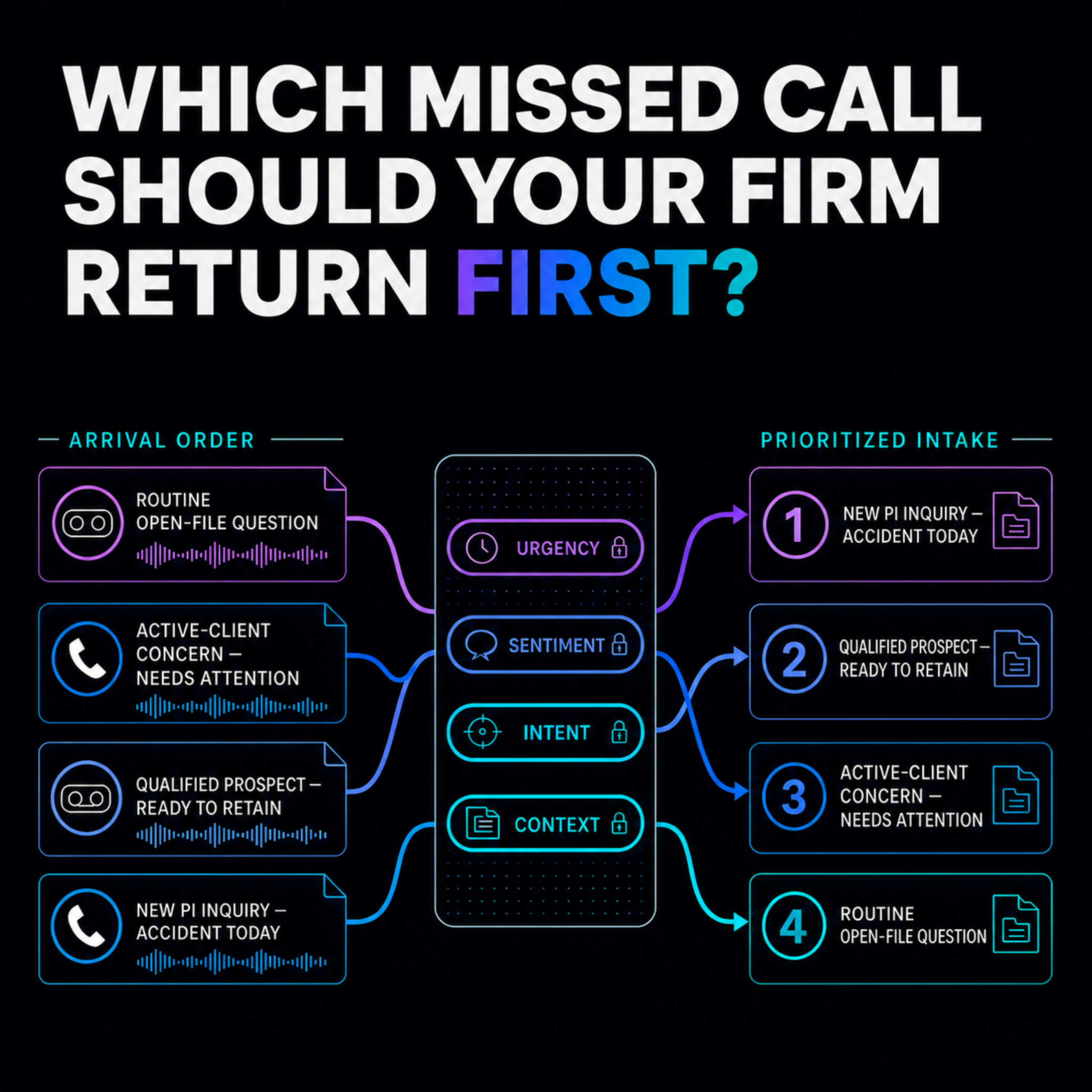
The number of missed calls is rarely the real problem. The order you return them in is. When you call back oldest-first, or in whatever sequence you happen to open the messages, the patient in pain and the new patient shopping three offices wait behind callers who could have waited. Numoloo is a callback prioritization platform that analyzes every call and voicemail for urgency, sentiment, and intent, then prioritizes which callback to make first, so the right patient hears back while they are still yours to keep.
Callback prioritization is the practice of returning calls and voicemails by how urgent and how valuable they are, not by the order they arrived. For a dental practice, that decides whether you fill this afternoon's cancellation or lose a new patient to the office down the road.
Key Takeaways
- Dental office missed calls cost you most when you return them in arrival order instead of by urgency and patient value.
- The highest-priority callbacks are usually same-day pain, new-patient inquiries, and open schedule slots you can still fill today.
- An answering service or AI receptionist answers the phone. Call recording and transcription store what was said. Neither one decides which callback to make first.
- Numoloo analyzes every call and voicemail, detects urgency, sentiment, and intent, and prioritizes your next callback. You still make every call.
- You can estimate what missed calls cost your practice from three of your own numbers: missed calls per month, the value of a booked patient, and how often a callback books.
Why does callback order matter more than call volume for a dental practice?
Every practice tracks how many calls go unanswered. Fewer track the cost of returning them in the wrong order. The patient with a broken crown and the caller ready to schedule should fill your two open operatories at 2 p.m., not the routine reschedule you happened to reach first.
You never recover empty chair time, and a new patient who books elsewhere becomes years of cleanings, crowns, and referrals you will never see.
A voicemail does not announce which caller is which. The one detail that sets an emergency apart from an errand lives in the message itself, and until someone hears it, every caller looks the same on the screen.
Which dental office missed calls should you call back first?
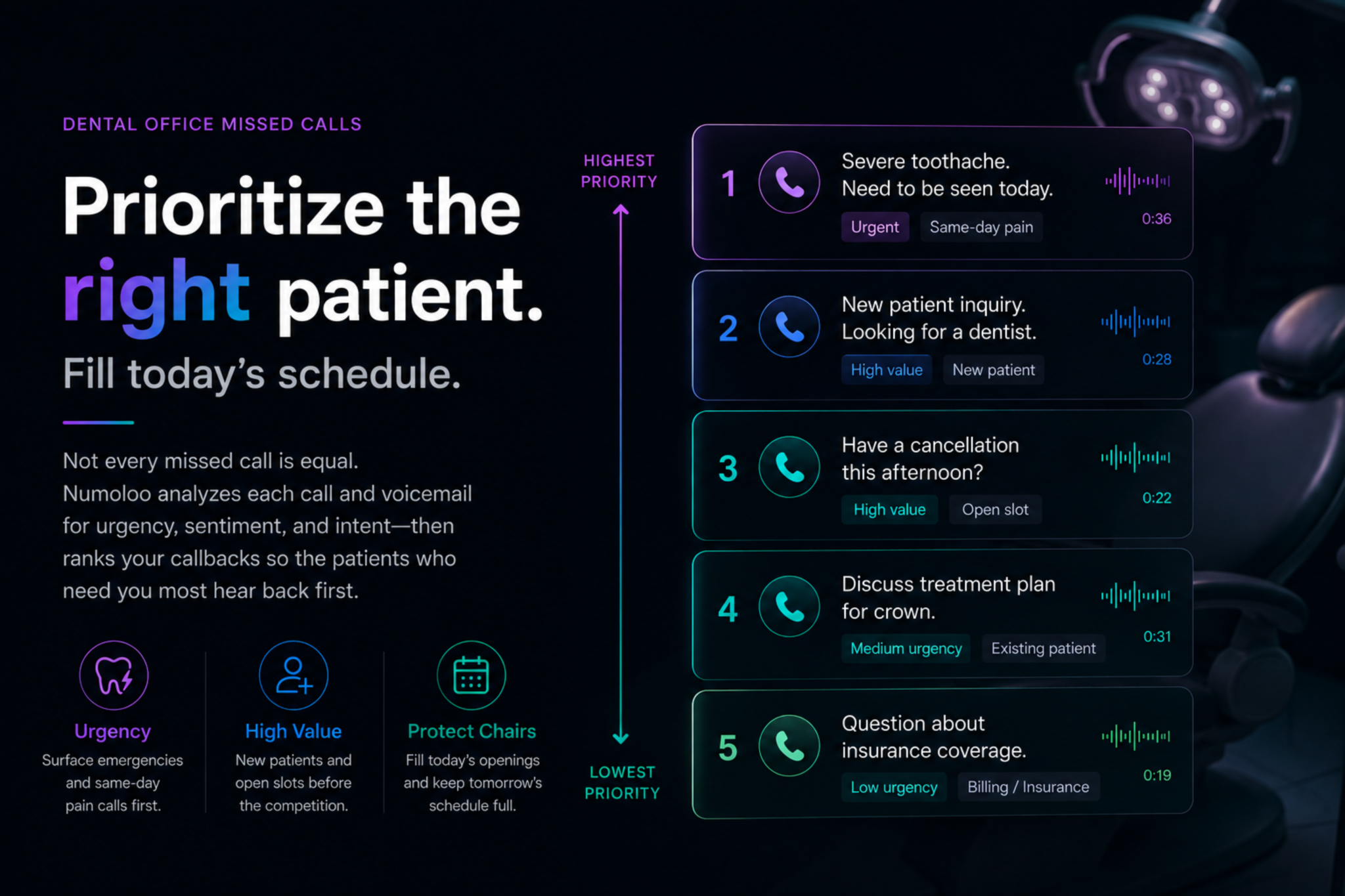
Not every missed call carries the same weight. A practical order for most practices:
- Same-day pain and dental emergencies: a patient in active pain will call the next office within minutes. These come first.
- New-patient inquiries: first-time callers carry the highest lifetime value and almost always contact more than one practice. Reach them before a competitor does.
- Open-slot fillers: cancellations and reschedule requests that can fill a gap in today's or tomorrow's schedule protect chair time you would otherwise lose.
- Treatment-plan follow-ups: patients deciding on proposed crowns, implants, or ortho need a timely answer to move forward.
- Insurance and billing questions: important to the patient, rarely time-sensitive for the schedule. These can wait behind the rest.
The hard part is telling these apart across a dozen voicemails without listening to each one end to end during patient care.
How is callback prioritization different from an answering service or call recording?
Dental offices already run tools that touch the phone. Most capture the call. None decide the order you return it.
| Category | What it does | What it leaves to you |
|---|---|---|
| Answering service or AI receptionist | Answers the phone when you cannot and takes a message or books a slot | You still decide who to call back first among everyone it logged |
| Call recording and transcription | Captures and transcribes what was said on the call | You read or skim every transcript to find the ones that need you now |
| Callback prioritization (Numoloo) | Analyzes every call and voicemail and prioritizes your next callback by urgency and intent | You make the calls in the order that protects the schedule and the patient |
An answering service fills the gap of a missed ring. Transcription gives you a record to search later. Callback prioritization decides which of the day's messages needs you first, which is the decision that fills chairs.
How much do dental office missed calls cost?
You do not need a study to estimate it. You need three of your own numbers:
- Missed calls or voicemails per month: how many calls go to voicemail or unanswered.
- Average value of a booked patient (AOV): what a new patient or booked appointment is worth to your practice.
- Callback conversion rate (CR): the share of returned calls that turn into a booked appointment.
Multiply them: missed calls per month × average booked value × conversion rate = revenue at stake every month.
The Numoloo missed-call calculator runs the same three inputs for you. The figure is usually larger than expected, because a single missed new patient represents years of recurring care, not one visit.
How does Numoloo prioritize dental office callbacks?
Numoloo is a callback prioritization platform made for businesses that rely on the phone for revenue and for keeping the patients they already have. Calls and voicemails happen in Numoloo. It analyzes every one for urgency, sentiment, and intent, then prioritizes which callback to make first.
For each conversation, Numoloo delivers a short summary and a pre-drafted response email, so you open a message already knowing what the caller needs and what to say.
Numoloo never calls or messages patients for you. You make every call. Numoloo decides the order and hands you the context, so the emergency and the new patient hear back before the routine reschedule, without you listening through every voicemail first. It works alongside your practice management system, and it is CRM-agnostic with no sales infrastructure to set up.
To see it on your own calls, try Numoloo free for 14 days. No credit card required.
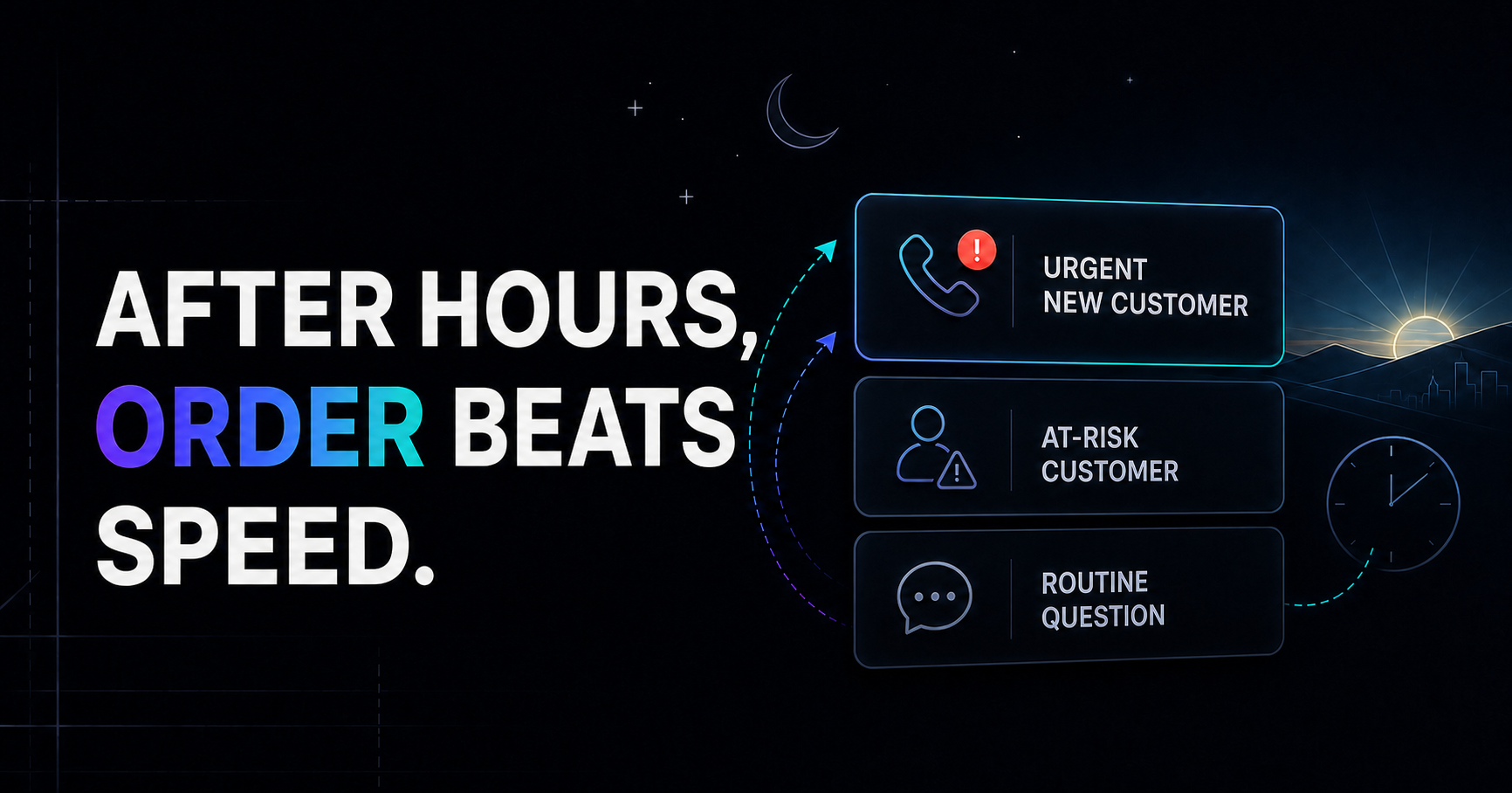
For the bigger picture on why order beats speed, read what is callback prioritization. For a closer look at the schedule side, see how missed calls leave empty appointment slots.
Frequently Asked Questions
What is callback prioritization for a dental office?
Callback prioritization is returning calls and voicemails by urgency and patient value instead of the order they arrived. For a dental practice, it puts same-day pain, new patients, and fillable schedule gaps ahead of routine questions.
Which missed calls should a dental front desk return first?
Return same-day pain and emergencies first, then new-patient inquiries, then callers who can fill an open slot today. Insurance and billing questions matter to the patient but rarely affect the schedule, so they can wait behind the rest.
How do I calculate what missed calls cost my dental practice?
Multiply your missed calls per month by the average value of a booked patient and your callback conversion rate. The Numoloo missed-call calculator does the math from those three inputs.
Does Numoloo answer the phone or call patients for me?
No. Numoloo analyzes your calls and voicemails and prioritizes which callback to make first. You make every call yourself, with a summary and a drafted response ready before you dial.
Will Numoloo work with our practice management system?
Yes. Numoloo is CRM-agnostic and needs no sales infrastructure, so it works alongside the practice management software you already use.
How is Numoloo different from an AI receptionist?
An AI receptionist answers the phone when you cannot. Numoloo prioritizes the callbacks you owe afterward, so you know which of the day's messages to return first.
Conclusion
Missed calls are unavoidable in a busy practice. Returning them in the wrong order is the part you can fix. Decide which patient hears back first by urgency and value, not by which voicemail you opened first, and you protect both today's schedule and next year's patient base.
Which callback would fill your next open chair?