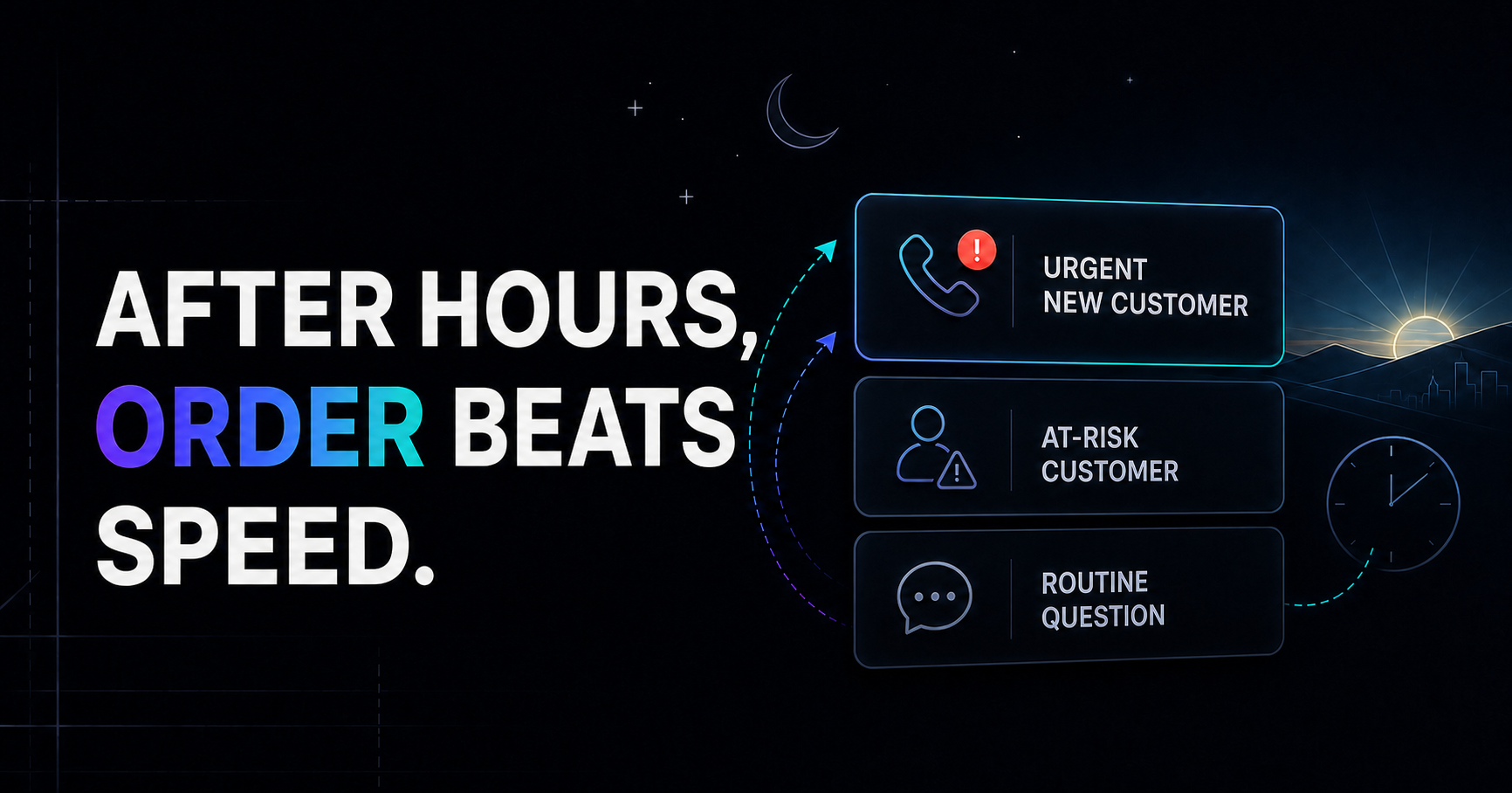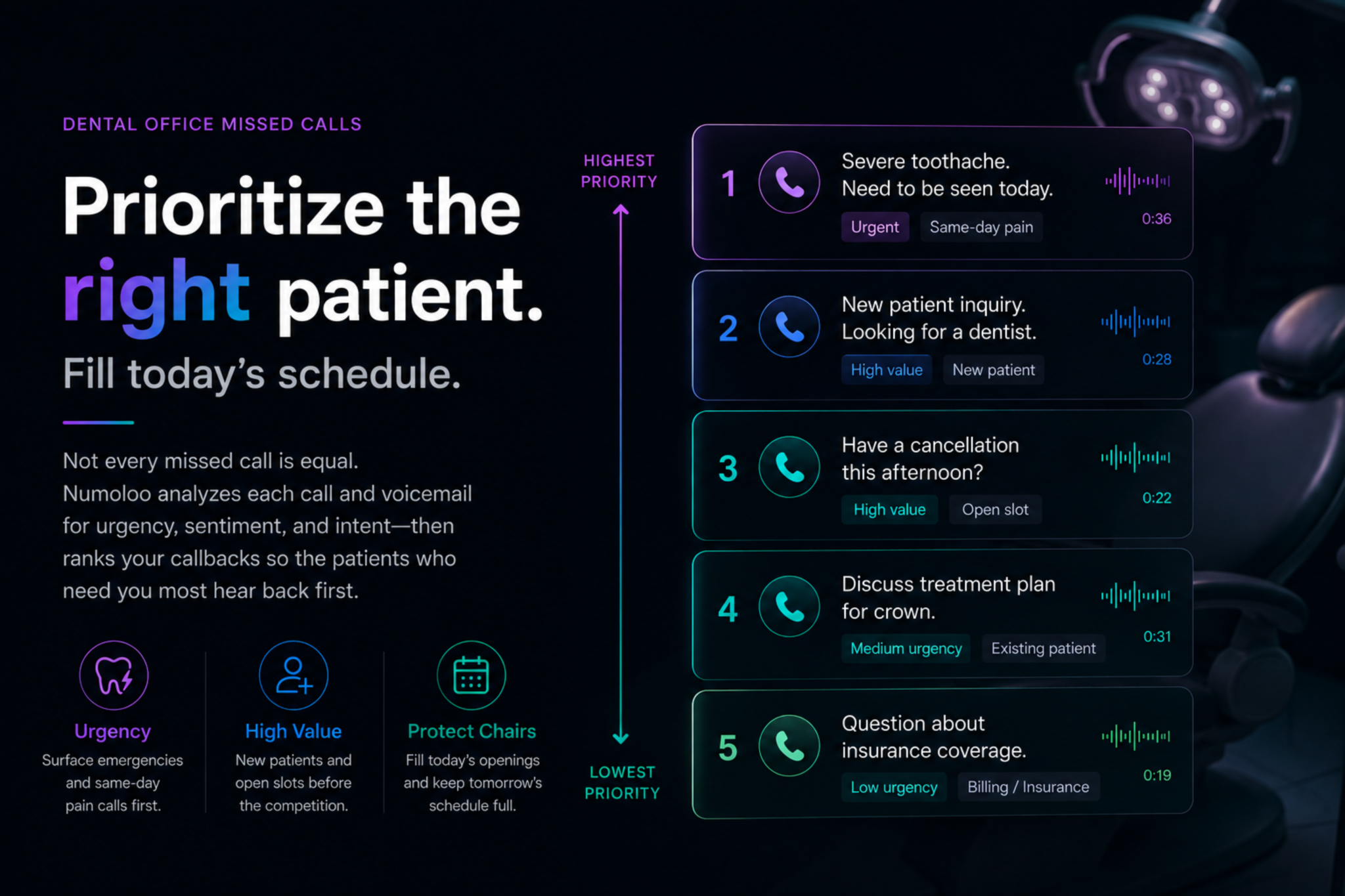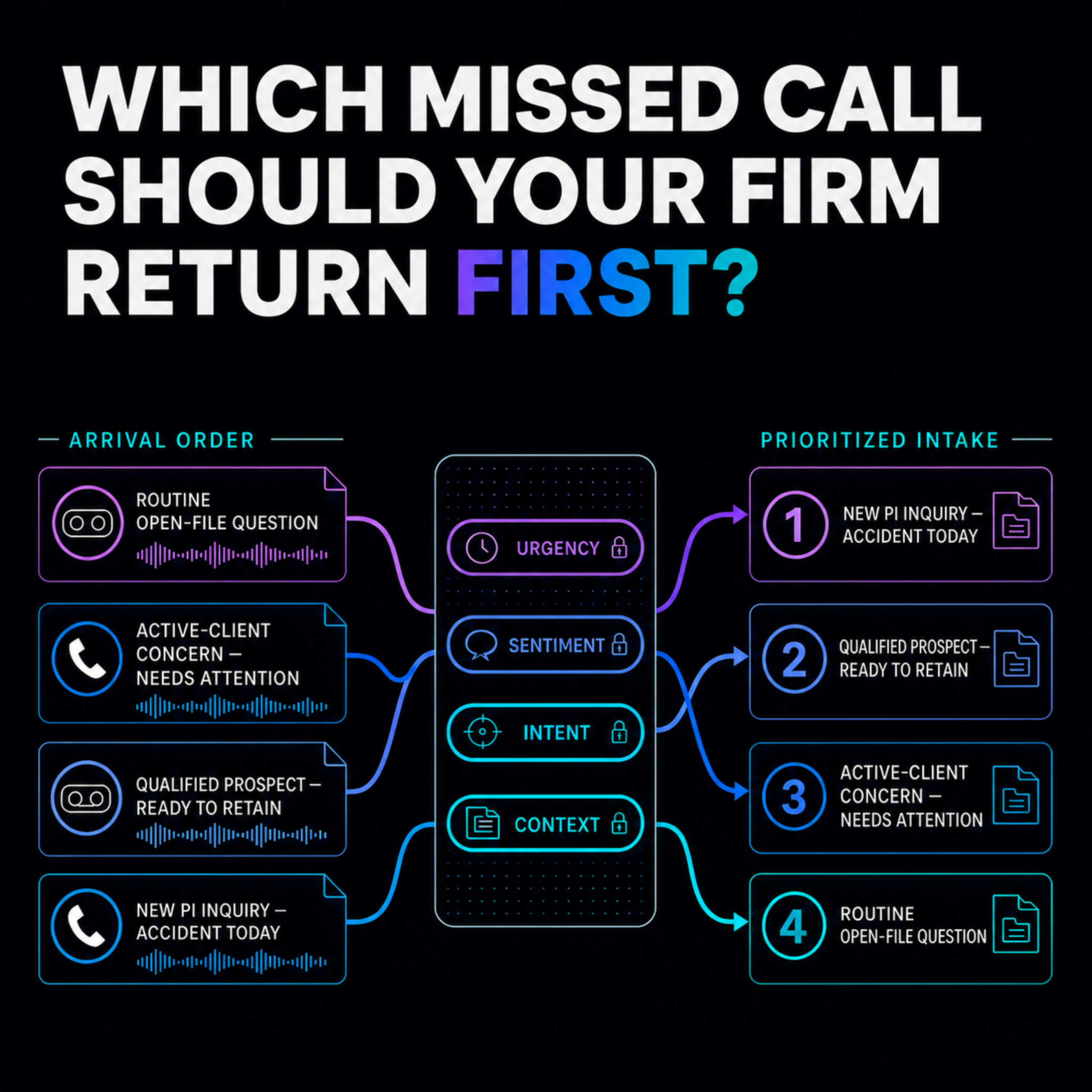
Law firm missed calls are not all the same. A call from someone with a time-sensitive matter carries more value to a firm than a routine question on an open file, and returning calls in the order they arrived cannot tell the two apart. Arrival order sorts by time received, not by urgency or the value of the matter.
That order is a decision, and it carries a stake. Sort intake callbacks by time and a high-value prospective client can come after calls that could have waited. The cost shows up as signed clients a firm does not win and referrals it does not earn.
This is where a callback prioritization platform like Numoloo helps. Callback prioritization means returning calls and voicemails by urgency and intent instead of by arrival time. Numoloo analyzes every call and voicemail, detects urgency, sentiment, and intent, and prioritizes which callback to make first.
Key Takeaways
- Law firm missed calls carry different value: a time-sensitive matter or a high-value case type is worth more to a firm than a routine question on an open file.
- Arrival order sorts intake callbacks by time received, not by urgency or the value of the matter.
- Callback prioritization returns calls by urgency and intent, so a high-value prospective client does not come after calls that could have waited.
- Numoloo analyzes every call and voicemail, detects urgency, sentiment, and intent, and prioritizes which callback to make first.
- Numoloo never calls anyone. You make every call, working from a prioritized list with a summary and a pre-drafted response for each caller.
- You can estimate what missed intake calls cost from three numbers: missed calls, average matter value, and conversion rate.
Which law firm missed calls should reach intake first?
Missed calls differ by the urgency and value of the matter, and that is what should set the order. A first-time caller with a time-sensitive matter and a routine question on an existing file are not equal stakes for a firm, and sorting by arrival time treats them as if they were.
The intake calls that carry the most for a firm tend to share a few patterns:
- Time-sensitive matters: an accident, an arrest, a filing deadline. The caller needs counsel promptly.
- High-value case types: personal injury, complex litigation, business matters. A single retained matter carries more value than a routine call.
- First-time prospective clients: a caller weighing more than one firm, where a clear, prompt response moves the decision forward.
- Escalations on active matters: an urgent question on an open file, where a prompt callback protects the client relationship.
Why does returning intake calls in arrival order cost you clients?
Arrival order measures one thing: which call came in first. That works when volume is low. As soon as calls come in close together, sorting by time puts urgency and value behind the clock. A high-value intake call that arrived later comes after lower-stakes messages, and a firm carries the cost in signed clients it does not win and referrals it does not earn.
Returning calls first-in, first-out feels fair, but it optimizes for the clock over the client. For the method behind ordering callbacks by urgency, see what callback prioritization is. The same pattern applies across professional services, which is why consultants and agencies lose work to the order they return calls in.
Answering service, AI receptionist, or callback prioritization for intake?
Most tools a firm reaches for do a different job than deciding who to call back first. A legal answering service or AI receptionist picks up when no one answers. Call recording and transcription give you the record. Catching and transcribing the call is table stakes. Which intake call you return first is the part no tool decides for you.
| Category | What it does | What you get | Best for |
|---|---|---|---|
| Answering service or AI receptionist | Picks up calls you miss and takes a message or books a basic consult | A message or a booked slot, with no sense of which caller is most valuable | Firms that want the phone covered when no one answers |
| Call recording and transcription | Captures and transcribes each call | A searchable transcript you review yourself | Firms that need records for training or compliance |
| Callback prioritization (Numoloo) | Analyzes every call and voicemail, detects urgency and intent, and prioritizes the callback order | A prioritized intake list with a summary and a pre-drafted response for each caller | Firms choosing the order to return intake calls in |
How can your firm estimate what missed intake calls cost?
You can put a number to missed intake calls with three inputs: how many calls and voicemails you miss, the average value of a retained matter, and the rate at which a returned call becomes a signed client.
Missed intake calls per month × average matter value × conversion rate = revenue at risk.
Run it with your own numbers in Numoloo's missed-call calculator instead of guessing. The estimate depends on your figures and your practice areas, not a generic benchmark.
How does Numoloo help a law firm prioritize intake callbacks?
Catching and transcribing calls is table stakes. Deciding which of them to return first is the part no capture tool handles. Numoloo is a callback prioritization platform that does that work.
- Analyzes every call and voicemail for urgency, sentiment, and intent, so a time-sensitive matter stands apart from a routine question.
- Prioritizes the callback order so the highest-value intake calls come first.
- Delivers a summary and a pre-drafted response for every conversation, so the context is ready before you call back.
- Delivers callbacks to your inbox or a dashboard, with no new sales infrastructure to set up.
Numoloo never calls a client for you. You make every call. Numoloo prioritizes the order and gives you the context for each callback. A solo attorney and a multi-attorney firm use it the same way.
Start your free trial. No credit card required.
Frequently asked questions
Which law firm missed calls should you call back first?
Return time-sensitive matters and high-value prospective clients ahead of routine questions on open files. They carry more urgency and value for a firm, so the order of your intake callbacks affects how many clients you sign.
How do I calculate what missed intake calls cost my firm?
Multiply the intake calls you miss by your average matter value and your conversion rate. Numoloo's missed-call calculator runs the estimate with your own numbers so you are not guessing.
Is callback prioritization the same as a legal answering service?
No. An answering service covers the phone and takes a message. Callback prioritization analyzes the calls you already have and prioritizes which caller to return first.
Does Numoloo call clients for me?
No. Numoloo never calls, dials, or contacts anyone. You make every call, while Numoloo prioritizes the callback order and gives you a summary and a pre-drafted response for each caller.
Can a solo attorney use callback prioritization?
Yes. A solo practice and a multi-attorney firm use it the same way, working from a prioritized list instead of arrival order.
What does Numoloo give intake staff for each callback?
Numoloo delivers a short summary of the call and a pre-drafted response for every conversation. Your intake staff have the context and the reason for the call before picking up the phone.
The order you return intake calls in is a decision worth making on purpose
Every firm returns its calls. The one choice arrival order makes for you is to put time ahead of urgency and the value of the matter. Deciding the order on purpose is how a firm signs the clients and earns the referrals that a first-in, first-out habit puts last.