Key Takeaways
- The real problem is not just missed calls. It is calling people back in the wrong order.
- For dental offices, med spas, clinics, and service providers, all missed calls look the same in logs, but caller needs and urgency are very different.
- Voicemails and basic call logs do not show who wanted a same-day slot, who was price-shopping, or who was calling to cancel.
- Better appointment scheduling from missed calls starts with prioritizing callbacks by intent and urgency, not by timestamp.
- Why Missed Calls Break Your Appointment Schedule (Even When You Call Back)
On a typical Monday in April 2026, the front desk at a busy dental practice logs 10 missed calls before noon. The team does call people back, but they start with the oldest message, then the clearest voicemail, then whoever they recognize by name.
By 2:00pm, they finally reach the person who left a muffled 12-second message. That caller had a cracked tooth and wanted to come in “this morning.” They already booked elsewhere.
You end up calling back the person asking about whitening prices before the patient who was trying to come in today with tooth pain. The 10:00am and 2:30pm slots stay empty. The phone calls happened. The callbacks happened. But the calendar still has holes.
Not All Missed Calls Carry the Same Weight
At 4:45pm, you look at missed calls and see the same thing: a phone number, a timestamp, maybe a short voicemail.
Those calls can mean very different things:
- New patient trying to book a first-time consult this week
- Existing patient trying to cancel Friday at 3pm
- Med spa client calling about a promo that expires tomorrow
- Vendor confirming a delivery
There is no clear signal of which calls should be returned first. You end up guessing based on area code, caller name if known, or voicemail length.
How Missed Calls Turn Into Empty Slots, No-Shows, and Lost Revenue
Consider a clinic with three same-day openings on a Wednesday. Four missed calls come in between 9:00 and 10:30am. Only one of those calls converted into a booked visit by 1:00pm.
The hidden costs stack up fast:
- A no-show that could have been back-filled from a missed call mentioning “this afternoon.”
- An unfilled high-ticket treatment block worth $800 or more in a 90-minute slot.
- An unused new-patient slot in a dental practice averaging $250 to $500 per visit.
Because voicemails do not clearly show urgency or booking intent, staff often discover “I wanted to come in today” only when they finally listen, hours too late. The result is empty chairs, gaps between procedures, and end-of-month shortfalls.
Why Adding More Staff or Online Forms Does Not Fix the Problem
Adding another person at the front desk can reduce missed calls during busy times like Monday mornings or lunch hours. But during surges, there will still be more callers than people available to talk.
Even with more staff answering calls faster, the order in which calls get returned is usually based on time, not on who has the most urgent or highest-value need.
Online booking forms capture some proactive users, but many high-intent callers still prefer the phone, especially when they need a same-day visit or have urgent questions. Voicemail and call reports don’t show which calls can fill open slots.
The real gap is not tools for answering more calls; it is a way to understand what each missed call was about so the right ones are handled first.
Prioritizing Missed Calls by Caller Need, Urgency, and Booking Window
A simple way to rank callbacks focuses on three signals:
| Signal | Examples |
|---|---|
| What the caller needs | New consult, emergency pain, Botox touch-up, insurance question |
| How soon they want to come in | Today, this week, next month |
| How likely it is to become a paid appointment | High-value procedure versus general pricing question |
A dental office might place “same-day emergency with pain” ahead of “checkup reschedule next month.” A med spa might place “limited-time package consultation” ahead of “generic pricing question.”
When teams think about calls as high, medium, or low priority, they can call back the people who can fill today’s or tomorrow’s open slots first. This is how lost bookings are recovered: not by calling faster, but by calling the right people first.
Where Simple Call Logs and Voicemails Fall Short
Here is how teams usually review missed calls: at 11:45am or 4:30pm, someone opens the phone app, sees 8 to 12 entries, and scrolls through short, muffled voicemails.
Common problems include:
- Unclear audio making it hard to tell if the caller said Tuesday or Thursday.
- Missing details such as how soon they want to come in.
- Callers who hang up without leaving a message at all, which can be 30 to 40 percent of missed calls.
Each voicemail takes time to listen to. Teams sometimes stop halfway through the list or leave “hard to understand” messages for later. These are often the very calls that were most urgent.
Without a clear picture of urgency and intent, calendars stay partially empty.
How Numoloo Helps You Prioritize Calls and Fill Open Slots
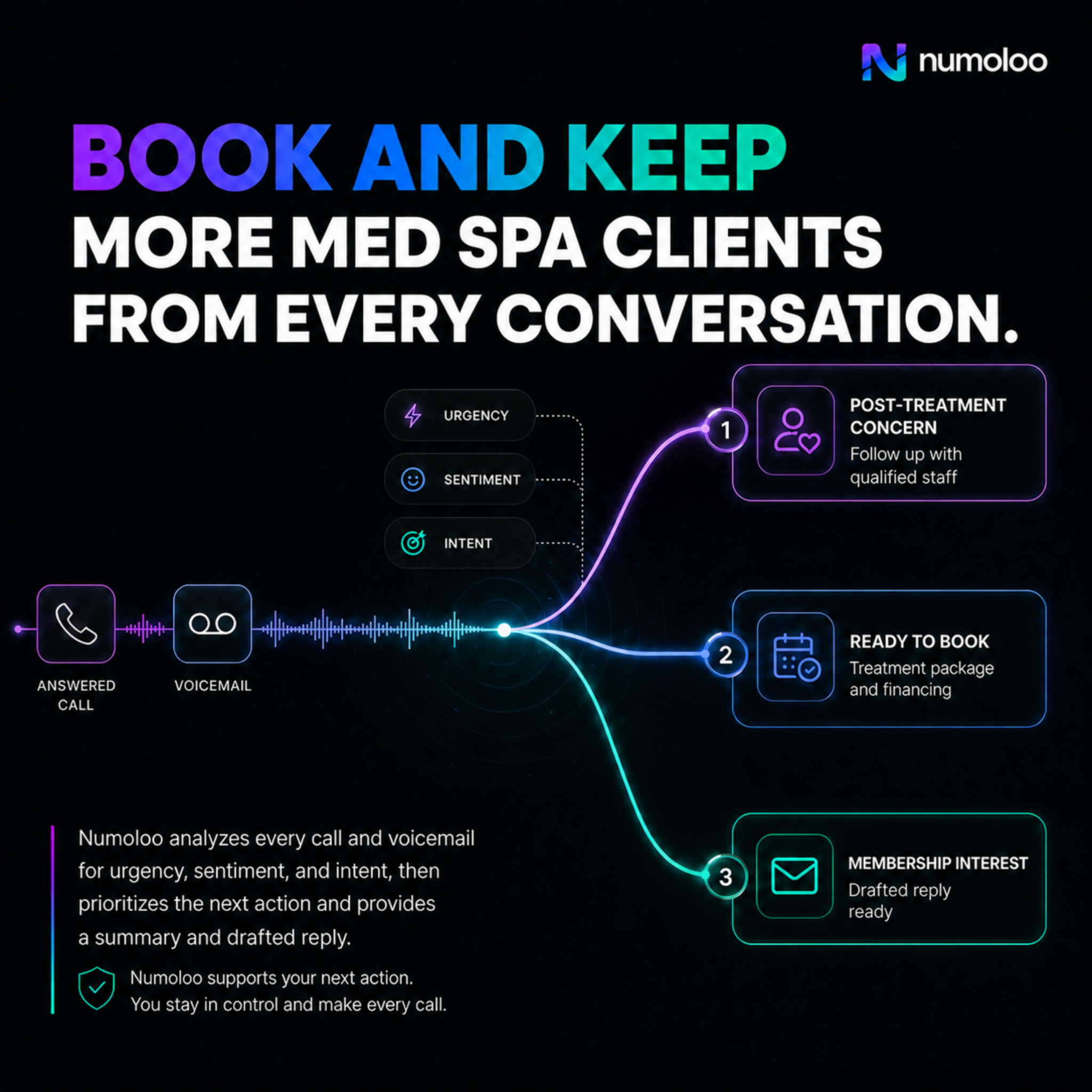
Numoloo analyzes your calls and voicemails so you know which calls to return first instead of returning calls in the order you received them.
For each call or voicemail, Numoloo shows:
- What the caller wants (book, reschedule, cancel, or question).
- How soon they want to book.
- The service they need.
You start with the calls that need to be returned first instead of working down the list.
Numoloo is for dental offices, med spas, clinics, and service providers where follow-up order determines bookings.
Numoloo Prioritizes Calls and Voicemails to Fill Your Schedule
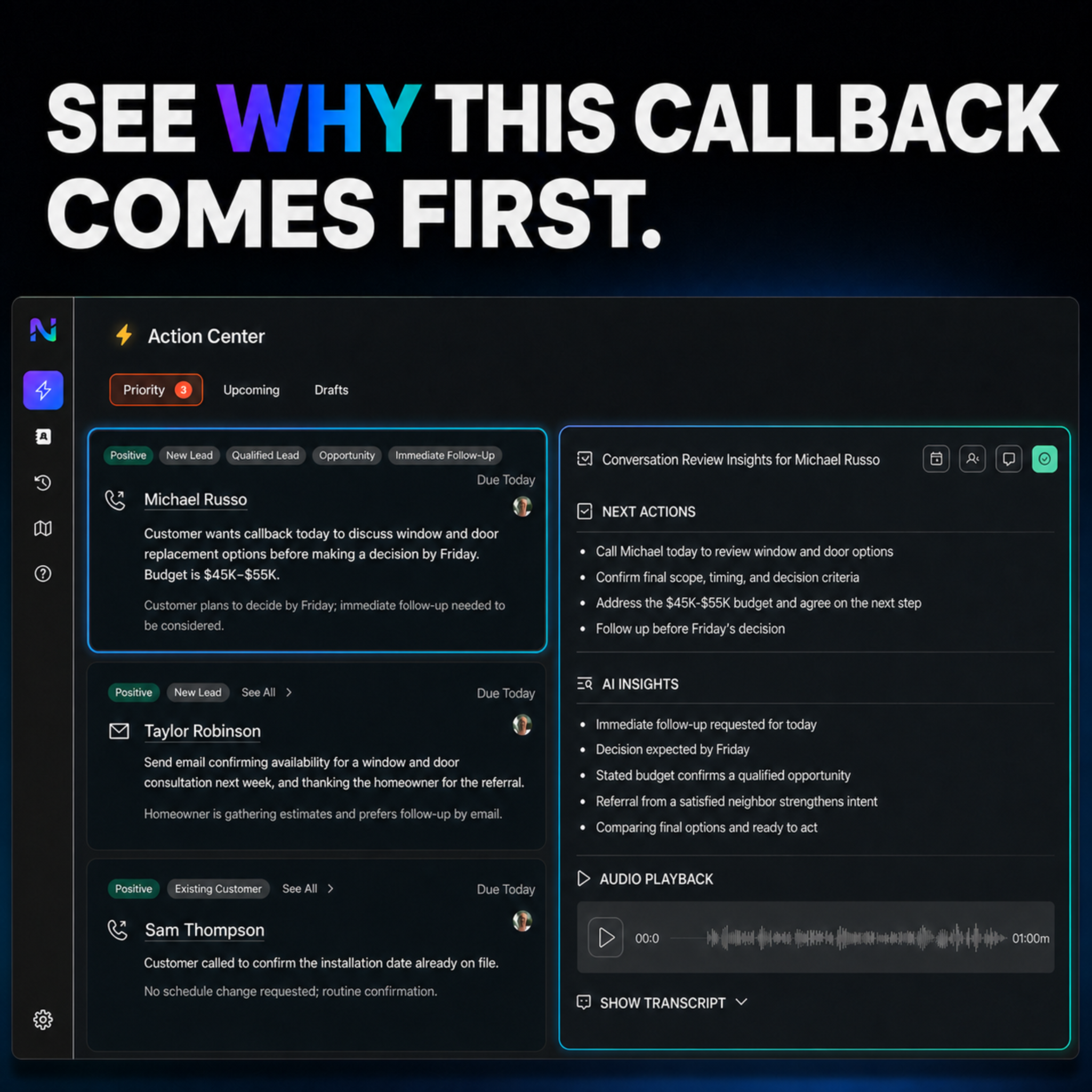
Instead of a raw call log, you see what each caller is asking for and how soon they want to book.
- New patient calling to book a first visit this week
- Existing patient calling to cancel Friday at 3pm
- Prospect asking about lip filler pricing
- Vendor confirming a delivery
You can quickly see which calls to return first and which can wait.
When a cancellation comes in at 9:10am for a 2:00pm slot, you can look back at earlier calls that mentioned “this afternoon” and call those first. Instead of guessing or working down a list, you’re using what each caller said to decide who to call next. The result is fewer empty slots and more bookings from the calls you already received.