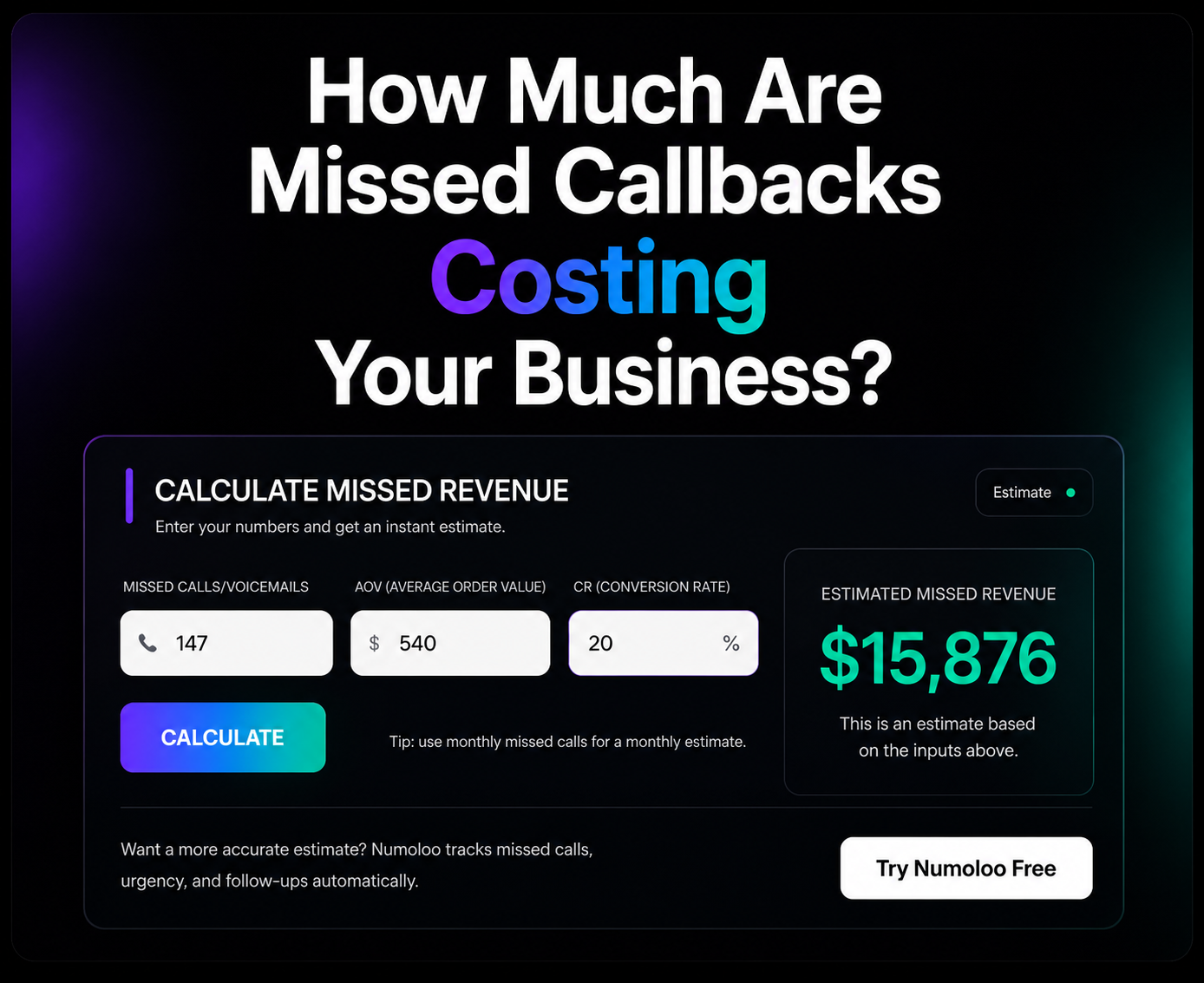
When a voicemail comes in, the instinct is to return it as soon as possible. That part is right. The problem is what happens when ten voicemails come in at once, or thirty over the course of a day. At that point, speed alone is not the answer. The order you return them in determines whether the right people hear back from you in time, and whether the ones who needed you today find someone else by tomorrow.
The Problem: Not All Calls and Voicemails Carry the Same Weight
For businesses that run on the phone, the volume of calls and voicemails is manageable until it isn't. A steady day becomes a backlog fast. The challenge is not just getting through the list. It's knowing where to start.
A voicemail from someone ready to schedule a job carries more urgency than a general inquiry that can wait until morning. A call from someone who left a time-sensitive request deserves a different response window than a follow-up to something already handled. Without a way to distinguish between them, businesses default to the path of least resistance: first in, first out.
That default costs money.
Common Mistakes Businesses Make With Call and Voicemail Follow Up
Returning calls in the order received. The queue is not a priority list. It is a timeline. Treating it as the former means high-value and time-sensitive calls get returned based on luck, not importance.
Relying on caller ID or familiarity. Known numbers feel like the obvious choice. But an unfamiliar number might be a new customer ready to spend, or someone with a same-day emergency. Routing by recognition is not a system. It's a bias.
Working without call context. When a team is returning calls without knowing what was said, follow-up is based on metadata, not substance. That produces inconsistent prioritization and a lot of callbacks to people who had low-urgency requests while high-intent voicemails sit in the queue.
What Happens When the Order Is Wrong
The downstream effects are consistent across industries. Someone who left a voicemail about a time-sensitive project with another contractor because they did not hear back that afternoon.
A prospect who expressed clear intent in a voicemail gets returned three hours later, by which point they have already moved on. A service request with a real deadline gets treated like a routine inquiry.
None of this is visible on a single day. Over a week or a month, the pattern becomes a revenue problem that is difficult to trace back to its source because each missed window looked like a routine callback at the time.
What to Listen for When Prioritizing
The content of a call or voicemail tells you nearly everything you need to know about where it belongs in the queue. A few patterns that consistently indicate priority:
Urgency in the language. Phrases like "today," "as soon as you can," or "I need this handled quickly" are direct. The caller is telling you when they need a response.
Stated intent. When someone says they want to schedule, get a quote, or move forward, that voicemail belongs at the top of the list. They have made a decision. Your job is to respond before they make a different one.
A specific ask. Voicemails that end with a clear request, call me back to confirm, send pricing before Friday, let me know if you have availability, define what needs to happen next. Those are actionable and bounded.
Time references. Any mention of a deadline, a window, or an upcoming date tells you the call has a shelf life. The response window closes whether you act on it or not.
What Effective Follow Up Actually Requires
Getting call and voicemail follow up right is not a matter of adding more staff or moving faster through the queue. It requires knowing what each call and voicemail contains before deciding what to return first.
That means:
Reviewing the actual content of calls and voicemails, not just who called and when.
Ranking follow-up based on urgency, intent, and the nature of what the caller asked for.
Having a consistent view of which conversations need a response now versus which can reasonably wait.
Keeping that process lean enough that it does not create more overhead than it saves.
Without those elements, follow-up stays reactive. Reactive follow-up consistently returns the wrong calls first.
How Numoloo Approaches This
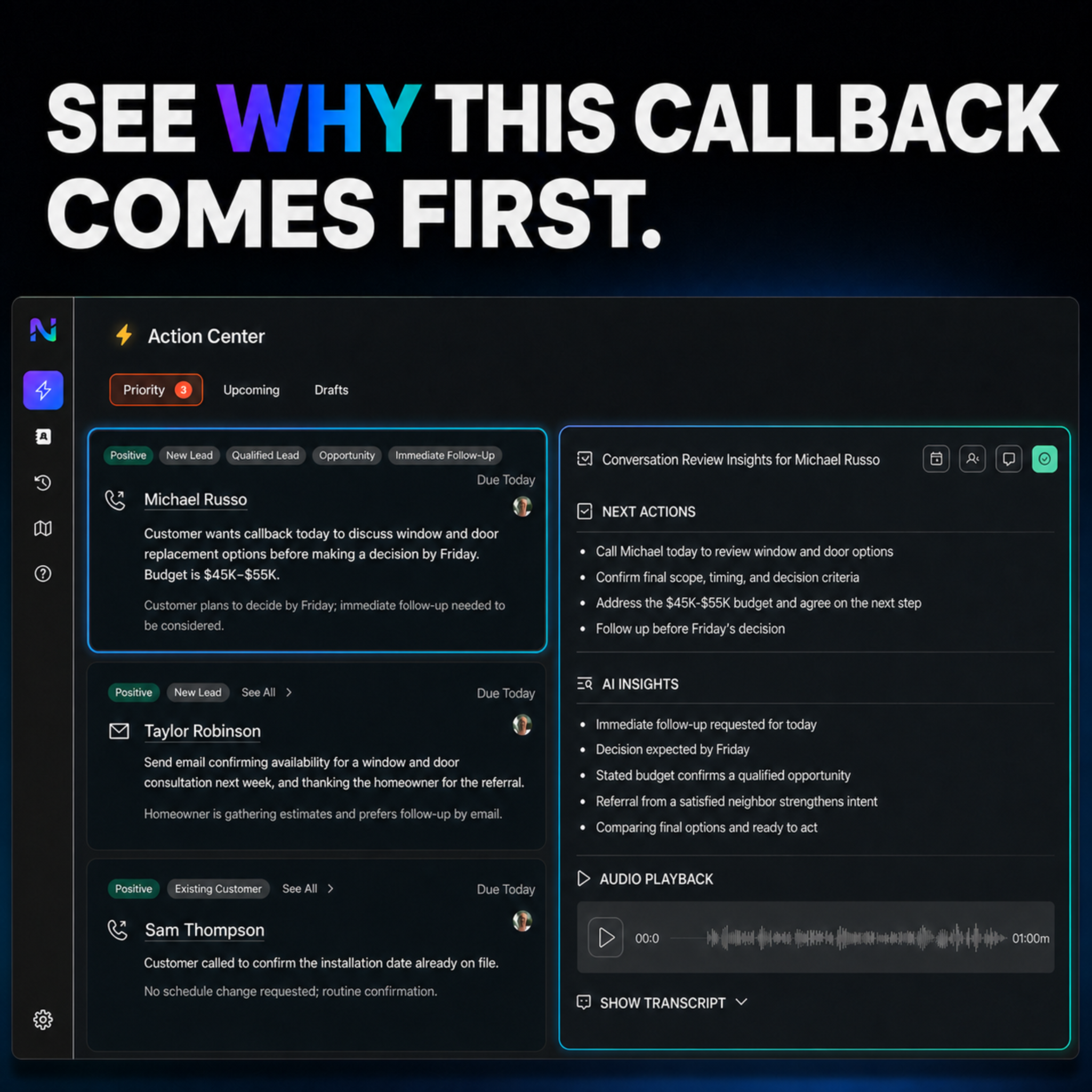
Numoloo analyzes every call and voicemail to detect urgency, sentiment, and intent, then ranks conversations dynamically based on what was said. That ranking is not static. As new calls and voicemails come in, the priority order updates, so the most urgent conversations always surface to the top regardless of when they arrived. You are not working from a list that was sorted once at the start of the day. You are working from one that reflects the current state of your pipeline.
After each conversation is analyzed, Numoloo delivers conversation insights and a pre-drafted email. The context is already there. The draft is already written. You are not piecing together what someone needed from a two-minute voicemail or trying to recall the details of a call from three hours ago. You review, refine if needed, and send.
The difference is not just speed. It is that the calls carrying the most weight, the ones with buying intent, time-sensitive requests, or urgency language, get your attention before that window closes. For businesses where the gap between first response and second place determines whether you get the job, that sequencing is where revenue is won or lost.
Real-World Examples
HVAC contractor. An HVAC company running two crews gets busy fast in summer. By midday, there are eight voicemails in the queue and no one has listened to any of them yet. The technician finishing a job is not thinking about callbacks. The owner is. Working through voicemails in order, a routine maintenance question gets returned before the homeowner who left a message at 9am saying their AC is out and they have elderly parents in the house. That call needed to happen first. It didn't.
Realtor. A buyer's agent juggling several active clients and multiple new inquiries is not short on calls to return. The ones that tend to wait are the unfamiliar numbers, new leads who found the listing online and left a voicemail. One of those voicemails is someone who just got pre-approved, needs to move quickly, and is calling two other agents the same afternoon. Returning that call third or fourth because it came from an unknown number is not a prioritization strategy. It's a missed commission.
Conclusion
The order in which calls and voicemails get returned is not a minor operational detail. For businesses where the phone drives revenue, it is one of the more consequential decisions made each day, and most businesses are making it without enough information.
Numoloo gives teams a clear, dynamically prioritized view of which calls and voicemails need attention first, along with the conversation insights and drafts to act on them without delay. The calls are all going to get returned. The question is which ones go first, and whether the answer to that is based on timing or on what the caller said.