Key Takeaways
- Most lost jobs don’t happen when you miss the call. They happen when you call back in the wrong order.
- Voicemails, call logs, and notes all look the same later, even though one call might be worth $150 and another $15,000.
- The real issue for most electricians isn’t call volume. It’s having no clear way to see which calls matter most at a glance.
- Prioritizing callbacks should come from what the caller needs: safety risk, timing, budget, and readiness to move.
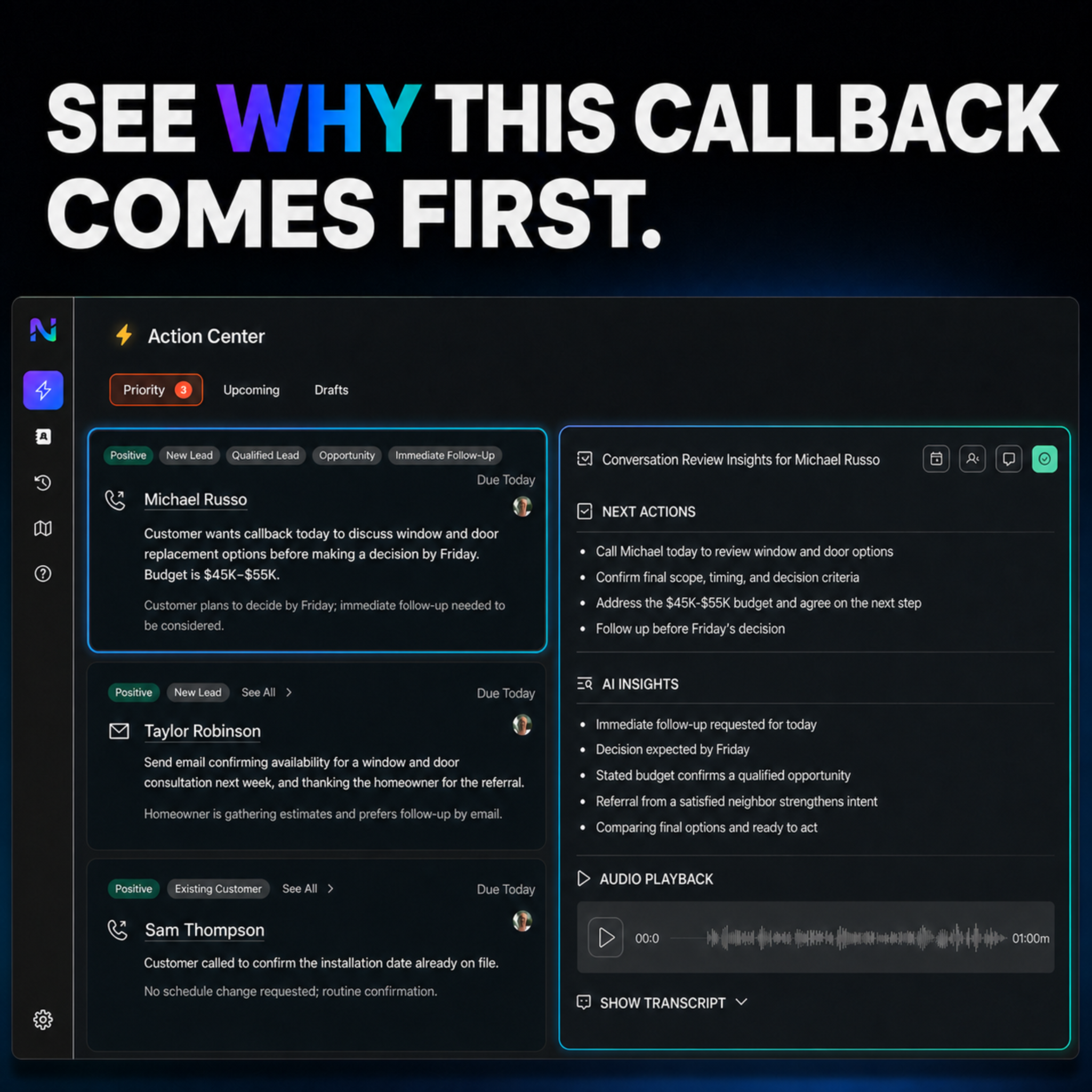
- Numoloo turns calls and voicemails into clear summaries with urgency flags so you know exactly who to call back first and why.
Why Missed Calls Hurt Electricians More Than They Think
Picture this: It’s a Tuesday in March 2026, 3:15 p.m. You’re on a ladder finishing a panel upgrade across town. Your phone buzzes three times in five minutes. All go to voicemail.
By 3:40 p.m., you have 4 missed calls and 2 voicemails. Each shows just a phone number and timestamp. Maybe “Wireless Caller” if you’re lucky.
Here’s the real damage:
- You lose jobs not just because you missed calls, but because you called the wrong person back first.
- Customers usually call 2–3 electricians and book with the first who responds clearly.
- Homeowners don’t wait hours for a callback on urgent electrical issues. They move on.
The problem isn’t missing calls. It's what happens next.
Not All Missed Calls Are Equal (But They All Look The Same)
A typical day might include missed calls about a tripped breaker, a panel upgrade quote, a GC needing rough-in dates, and a warranty question.
At 5:30 p.m., every call looks identical:
- Caller ID (often “Wireless Caller”)
- Time of call
- Voicemail badge (no urgency rating)
Here’s how that plays out:
| Call Type | Actual Value | What It Looks Like on Your Phone |
|---|---|---|
| $12,000 service upgrade from a Dallas homeowner | High | Unknown number, 10-second voicemail |
| $95 ceiling fan install | Low | Unknown number, 8-second voicemail |
| Spam solar sales pitch | Zero | Unknown number, 12-second voicemail |
| Emergency—burning smell from panel | Critical + High | Unknown number, 9-second voicemail |
Every call looks identical. Electricians often call back low-value jobs before true emergencies and big leads.
Why Voicemails And Notes Aren’t Enough To Prioritize Follow-Up
During a busy week, techs listen to voicemails in the van, jot down half a sentence—“Mrs. H – breaker?”—and plan to return calls later. By then, notes don’t mean much.
Many callers don’t leave voicemails. They hang up and call the next electrician. When messages are left, they sound similar:
- “Hi, my power’s out in part of the house.”
- “Need an electrician to look at some outlets.”
- “Quick question about a light switch.”
None clearly show:
- Are they ready to schedule now or just price shopping?
- Is this a safety hazard or minor issue?
- Are they homeowner, property manager, or GC?
Handwritten notes and voicemail icons don’t solve this. They just create a list where every call looks equally important or forgettable.
The Real Problem: Calling People Back In The Wrong Order
Most electricians don’t lose jobs because they never call back. They lose them because they call low-urgency, low-value jobs before the important ones.
Here’s a real timeline:
- 2:05 p.m. – Property manager calls about a building re-lighting project for April.
- 2:07 p.m. – Homeowner calls about a burning smell from a panel.
- 2:11 p.m. – Past customer calls with a GFCI trip.
All go to voicemail while the tech is in an attic.
At 3:00 p.m., without context, here’s what usually happens:
- Call back the GFCI job first (shortest voicemail)
- Then the property manager
- Finally the burning smell—by then the homeowner booked emergency service elsewhere
One missed safety call turned into a lost $2,500 panel job. Do that once a month, and you lose $30,000 a year.
Prioritize by:
- Safety risk
- Job size
- How soon caller is ready
- Existing relationship
But you can’t see this from a missed call log.
How To Think About Call Priority: Urgency, Intent, And Next Steps
Callbacks should be based on what the call is about, not just timestamp or caller ID.
Urgency:
- Burning smells, visible arcing, repeated tripping, or total power loss should rise to the top. These convert at 60–65% if answered fast.
Intent:
- Is the caller just price shopping?
- Or saying “we want this done this week”?
- Or “we have permits and need someone to start on the 15th”?
Next steps:
- Did you promise to send an estimate by a date?
- Did you agree to confirm a service address or window?
- Is there a scheduled job depending on your callback?
A callback list should look like this:
- Safety issues + ready to book
- Repeat customers with time-sensitive work
- High-value quoted work with deadlines
- Lower-value or flexible jobs
This is simple. The hard part is getting that info without listening to every voicemail twice.
Where Most Call Systems Fall Short For Electrical Contractors
Most electricians use:
- Cell phone as main business line
- VoIP with basic logs
- Office staff taking messages and forwarding texts after hours
These tools only give:
- List of missed calls
- Raw voicemails
- Maybe a generic “high priority” tag if remembered
None tell crews:
- “This one is an emergency.”
- “This one is a $10k lead.”
- “This one can wait until tomorrow.”
During busy season, offices flag everything “urgent” because they can’t listen closely. Call forwarding helps route calls but doesn’t capture job details or rank importance.
The gap isn’t answering more calls live. It’s turning what callers say into clear, ranked follow-up tasks.
How Numoloo Helps Electricians See Which Calls Matter First
Numoloo works with the calls and voicemails you already receive.
After each one, you get a short summary showing what the caller needs, how urgent it is, and how ready they are to move.
Instead of a long list of missed calls, you can immediately see who to call first, who can wait, and which calls can wait without risking the job.
Revenue, Time, And Stress: What Better Call Priority Really Changes
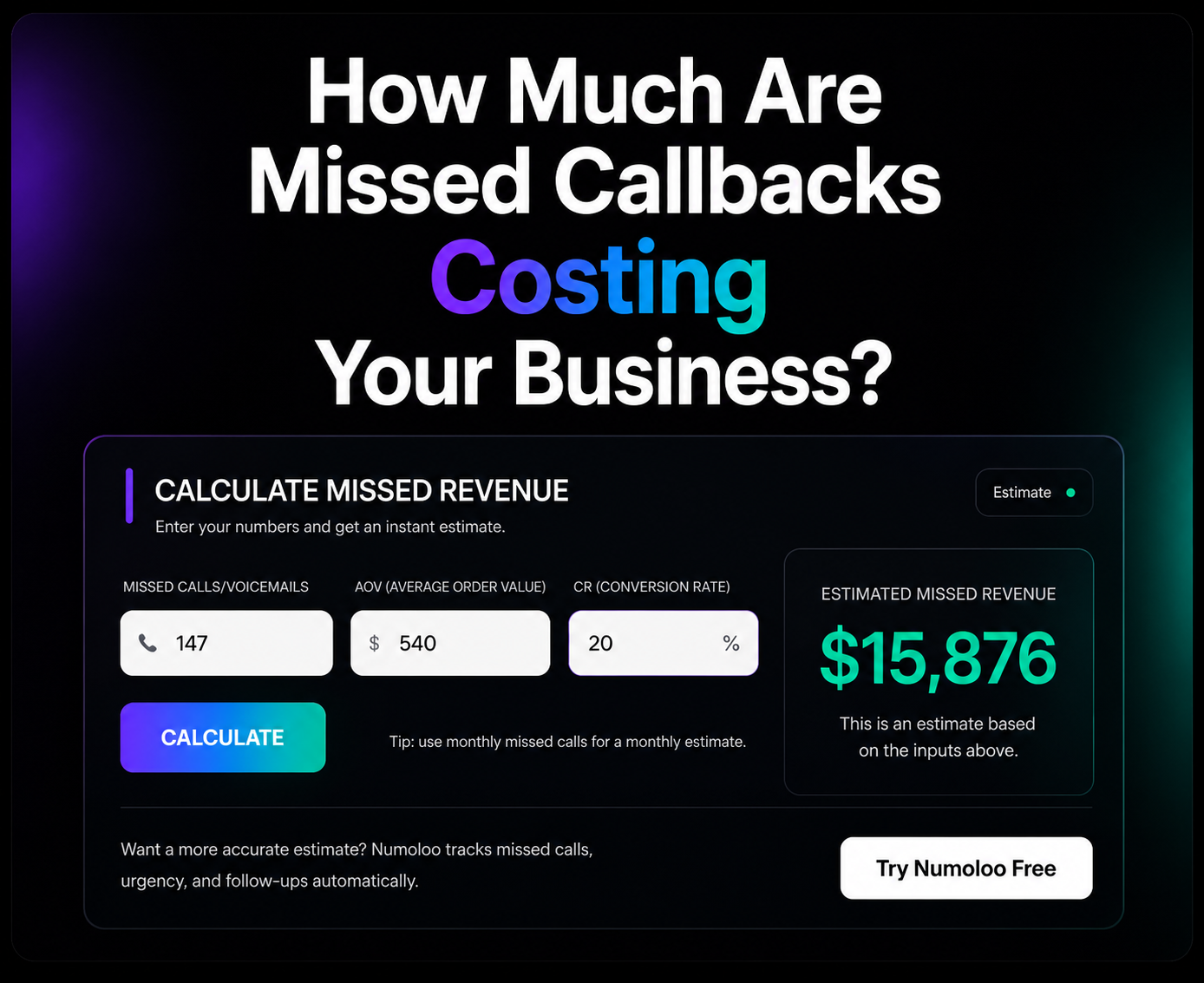
If you lose one $1,800 job a month by calling back late or in the wrong order, that’s over $21,000 a year.
When urgent and high-value calls come first:
- Schedules fill with better jobs
- Fewer last-minute emergencies happen
Priorities reduce stress:
- No more guessing which voicemail matters
- Fewer angry clients saying, “I called three times last week”
Instead of hiring extra staff to sort voicemails, teams can rely on clear summaries to know what matters. That saves time and helps you land more jobs.
For small electrical businesses, protecting a few key jobs each month has a bigger financial impact than small savings on tools or trucks. Better follow-up order protects revenue without adding hours.
Practical Takeaway: How Electricians Can Improve Follow-Up Starting This Week
Electricians don’t need perfect phone coverage. They need clear info on which calls matter most—emergencies, weekend calls, or big leads during busy season.
Here’s a checklist:
- For 7 days, write down every missed call and its job value or if it was lost.
- Mark which calls you wish you had returned sooner.
- Compare the “high-value” calls to the smaller jobs.
- Decide if you want a tool like Numoloo to separate these automatically.
Every missed call is a potential job—but not every job is equal. Your callback list should reflect that.
Improving follow-up isn’t about answering more calls. It’s about knowing which calls to return first every time.