Introduction
Some missed calls turn into jobs. Others never go anywhere.
The difference is not timing or luck. It comes down to what the caller actually said and whether you recognize it before you call them back.
Most businesses do not have a clear way to do that. They look at a list of missed calls, listen to a few voicemails, and decide who to call based on instinct.
That works some of the time. It also means real opportunities get treated the same as casual inquiries, and the outcome depends on which calls get attention first.
The Typical Day: When Missed Calls Pile Up
Picture a contractor or service business owner on a typical workday.
The morning is spent on job sites or in meetings. The phone rings, but it is not always possible to answer. By lunch, several missed calls and voicemails have come in.
The afternoon follows the same pattern. More calls come in during appointments or while driving between locations. Some leave messages. Others do not.
At the end of the day, the owner finally checks the phone. The call log shows a mix of unknown numbers, repeat callers, possible spam, and voicemails of different lengths. There is no clear way to tell which missed calls are worth hundreds or thousands in revenue and which are low priority.
Most people do not have the time or energy to analyze every message in detail. So they guess. They may call the oldest number first or the one that looks familiar. These shortcuts feel practical, but they ignore what was actually said.
How Most Businesses Decide Who To Call Back First
Without a clear system, businesses rely on patterns that feel organized but miss the point.
Common approaches include calling back familiar numbers first, responding only to voicemails, or relying on instinct based on how a message sounds at first listen.
Phone logs and voicemail inboxes show only surface details. They do not show the content of the conversation.
When everything looks similar, decisions become inconsistent. A casual inquiry might get attention before a time-sensitive request simply because it is easier to process.
The Signals Inside Calls That Predict Which Ones Become Jobs
Inside each voicemail or callback is information that indicates whether the call is likely to turn into work.
There are four main signals to look for:
Urgency, where the caller expresses a time-sensitive need.
Intent, where the caller shows they are ready to move forward.
Sentiment, where the tone of the caller reflects frustration, pressure, or seriousness versus casual interest.
Clear next steps, where the caller asks for a specific action such as scheduling or confirming.
Real-World Scenarios: When Callback Decisions Make Or Break The Job
Job-Site Afternoon: Choosing Between Two Missed Calls
A contractor working a full-day job checks their phone at the end of the day and sees several missed calls.
One call came in earlier but left no message. Another came in later with a voicemail describing a time-sensitive problem that needs same-day attention.
If the earlier call is returned first, time is spent on a conversation that may not lead anywhere. Meanwhile, the urgent caller is waiting and may choose another business.
The opportunity is not lost because of lack of demand. It is lost because the signal inside the message was not recognized early enough.
End-Of-Day Voicemail Review: The High-Value Message At The Bottom
A business owner reviews voicemails at the end of the day and sees a list of messages.
Some are minor requests. Others are general questions. One message describes a larger opportunity, such as ongoing work or a recurring contract.
Without a clear way to evaluate them, callbacks happen in whatever order feels easiest. Lower-value conversations take time, and higher-value ones are delayed.
By the time the most important message is handled, the opportunity may already be gone.
What Happens When You Handle Every Call The Same Way
When callbacks are handled without looking at urgency, intent, sentiment, or clear next steps, results become inconsistent.
Lower-priority conversations take up the limited time available for follow up. Higher-value calls wait longer than they should.
Over time, fewer jobs are booked from the same volume of calls because attention is spent in the wrong places.
How Numoloo Helps You Turn The Right Missed Calls Into Jobs First
Numoloo is a call and voicemail intelligence platform designed for businesses that rely on the phone to generate work.
We built it for situations where there is a long list of missed calls, limited time, and no clear way to decide what to handle first.
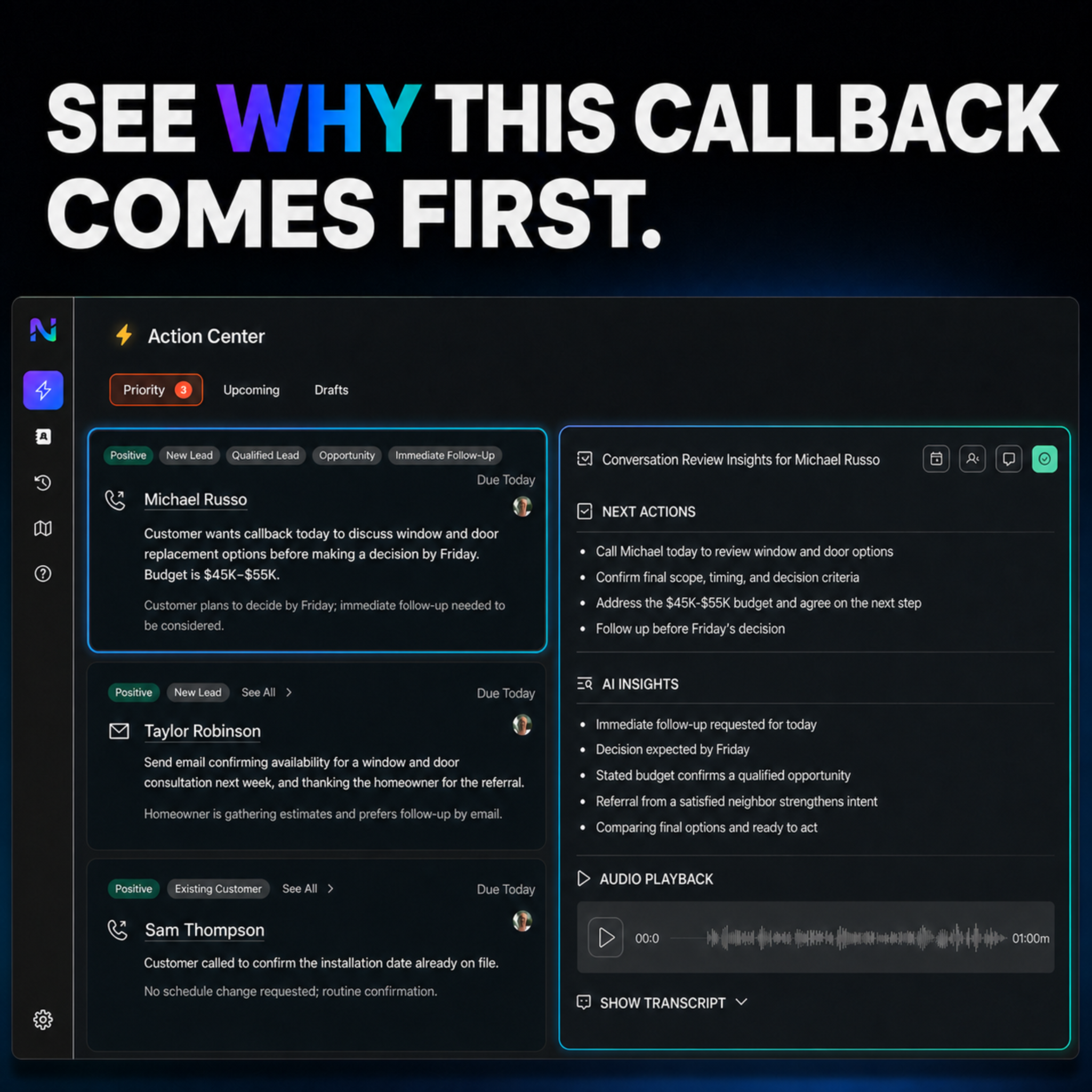
Numoloo records and transcribes calls and voicemails, then identifies urgency, intent, sentiment, and clear next steps based on what callers say.
Instead of showing a list of numbers and timestamps, it highlights the conversations that are most likely to turn into jobs.
When reviewing calls at the end of the day, you see which ones to return first based on what matters, not just when they came in.
Numoloo also provides summaries and suggested responses so you can act quickly without replaying messages or guessing.
It works alongside your existing phone setup, so there is no need to replace your current system.
Conclusion
Some missed calls turn into jobs. Others do not.
The difference is based on what the caller said and whether that information is used to guide follow up.
When businesses rely on guesswork, results vary. When they recognize the signals inside each conversation, outcomes become more consistent.
Numoloo makes that possible by showing which calls to handle first.