Key Takeaways
- Follow-up order should be based on what the lead needs, not when the call came in.
Why Lead Prioritization Is Your Real Bottleneck
It’s Tuesday morning, May 2026. You open your laptop and stare at your inbox: 22 voicemails from overnight, 15 form submissions, and a handful of active deals sitting in your CRM. Every one looks important. You have no idea who to call first.
The biggest problem is not effort, speed, or volume. It’s choosing the wrong lead to call first when several look good enough. Most sales reps and founders work hard. They respond quickly. But they respond to the wrong people, in the wrong order, and lose deals they should have won.
Consider this: a voicemail at 9:13 AM says “just getting some pricing information.” Another at 9:27 AM says “our phones are blowing up and we’re losing bookings. I need a solution by end of month.” Both show up as identical line items in your call log. Both get the same treatment because you can’t see the difference at a glance.
This shows up most in businesses that rely on inbound calls and follow-up to close deals. You’re not doing outbound prospecting where you control the pace. You’re reacting to demand, and when that demand arrives, you have to know who needs you most.
What matters is knowing who needs your call first.
Why All Leads Look the Same After the Fact (But Aren’t)
Call logs, CRM records, and voicemail systems flatten very different conversations into equivalent-looking entries. A prospect who left a voicemail about a real emergency and a prospect casually comparing tools both appear as a name, timestamp, and maybe a two-word note.
Here’s what typical lead data looks like after the fact:
| Lead | Note | Status |
|---|---|---|
| Sarah M. | “Good call, follow up” | Warm |
| James T. | “Interested, send info” | Warm |
| Carlos R. | “Needs pricing” | Warm |
Every one of these could be a $50K deal closing this week or a lead who isn’t ready to move for a year. The notes don’t tell you. The status field doesn’t tell you. And you don’t remember because you talked to 30 people last week.
Reps often rely on memory or whoever they spoke to most recently. This works when you have five active deals. It breaks down completely once you have more than a handful of sales prospects in motion.
When all leads look equal on the screen, you will accidentally treat a “ready to sign this week” buyer like a casual inquiry. That’s how you end up with “we went with someone else” emails from people you should have called first.
The Only Three Things That Should Drive Lead Priority
Instead of chasing every engagement metric and form field, sales reps and founders should rank leads using three simple dimensions: need, urgency, and readiness.
Need: How painful is the problem right now?
High-need prospects are experiencing concrete business impact. They’re losing customers, missing revenue, or watching operations break down. Low-need prospects are curious about improvements or exploring options for someday.
Compare: “We’re losing customers because we can’t handle service calls” versus “We might switch tools at some point.” The first is on fire. The second is not.
Urgency: What’s the time pressure?
Urgency shows up in clear statements: “We need this live before April 30,” “Our contract ends next month,” or “My boss told me to find a solution by Friday.” Without a deadline, deals drift. With a deadline, they close.
Readiness: How close are they to saying yes?
Readiness indicators include: the person on the call has authority to decide, they’re asking implementation questions instead of high-level ones, or they request a formal quote. Low-readiness signals include vague interest, comparing three competitors with no clear timeline, or asking only about price with no context.
Think of it this way: Who’s bleeding? Who’s on a deadline? Who can actually sign?
The best leads to contact first score high on all three. But realistic prioritization also means recognizing which leads have at least two strong dimensions. A prospect with high need and high urgency but low readiness (no budget yet) still deserves attention before someone with only casual interest.
Step-by-Step: How to Prioritize Sales Leads in Your Day
This section is a playbook you can follow tomorrow morning. Not theory, just steps.
Step 1: Separate today’s leads into buckets
Start each day by sorting your leads: new inbound calls from overnight, new voicemails, active deals waiting on next steps, and older follow-ups from the past week. This prevents fresh, urgent demand from being treated the same as stale opportunities. A voicemail received at 7 AM asking for a callback should not compete with a contact from three days ago who hasn’t responded.
Step 2: Extract the signal from each new call or voicemail
For every new conversation, pull out three specific pieces of information:
- What problem did the prospect describe?
- Did they mention any time pressure (deadline, contract renewal, competitor deadline)?
- What next step did they ask for (callback, quote, demo)?
Stop writing notes like “interested” or “follow up.” Capture what they actually said about their situation.
Step 3: Score each lead on need, urgency, and readiness
Use a simple 1-3 scale for each dimension:
| Score | Need | Urgency | Readiness |
|---|---|---|---|
| 3 | Problem actively costing money/customers | Specific deadline mentioned | Asked for demo, quote, or has authority |
| 2 | Pain point mentioned but not damaging yet | Timeline hinted but not concrete | Research mode, general questions |
| 1 | Vague interest, no clear problem | No time pressure | Just gathering info |
A lead scoring system doesn’t need to be complex. It needs to be consistent and usable.
Step 4: Rank by total score, break ties with real deadlines
Add the three scores together. A lead at 9 (3+3+3) gets called first. If two leads tie at 8, the one with the hardest deadline wins. If both have the same deadline, prioritize larger revenue impact.
Step 5: Build a specific call order and stick to it
Write out your top 10 leads for the day in order. Call them in that order. Don’t bounce between your inbox, CRM, and call log based on who just responded or who seems easier. Discipline in your sales approach prevents the common mistake of cherry-picking smaller, easier opportunities.
Step 6: Flag missed high-priority leads at end of day
Before you close out, mark which high-priority leads you didn’t reach. Schedule specific next actions: callback tomorrow at 8 AM, try again Thursday morning. This prevents your most promising leads from sinking back into the undifferentiated pool overnight.
Signals From Calls and Voicemails That Actually Matter
Most of the strongest buying signals are spoken, not clicked. They live in the words prospects use on sales calls, voicemails, and follow-up conversations. These signals rarely make it into CRM fields because they require judgment and context to extract.
High-priority signals (contact first):
- “We’re losing customers because of [problem]”
- “This is costing us $X per day”
- “We have budget approved”
- “We need someone to start this month”
- “My boss asked me to solve this by [date]”
- “Our current contract ends [date] and we’re deciding now”
- Prospect calling back the same day asking follow-up questions
- Requests for formal proposals or implementation timelines
Medium-priority signals (contact soon):
- “We’re just exploring options”
- “We might switch later this year”
- “Send some info and I’ll share it with the team”
- “I need to loop in another person before we move forward”
Low-priority signals (nurture, don’t contact first):
- Vague interest with no clear problem
- Price-only focus with no context about needs
- No response when followed up with specific next steps
- Generic questions with no timeline
The challenge is that these signals sit in recordings, transcripts, and half-remembered notes. When a rep relies only on what’s recorded in their customer relationship management system, they miss the strongest predictors of whether a prospect will close and when.
Why Traditional Scoring Models Break for Small, Call-Heavy Businesses
Common frameworks like BANT, CHAMP, and MEDDIC are valuable for structured discovery calls. But for small businesses relying on inbound calls and voicemails, they often stay stuck in spreadsheets and training decks instead of influencing daily behavior.
The core problem: these lead scoring models depend on data capture that doesn’t happen consistently. To score by BANT, you need clean data on budget amount, decision maker name, specific challenges, and timeline. A voicemail typically reveals one or two of these dimensions, not all four.
Marketing automation platforms and predictive scoring tools track what happened, email opened, form submitted, website visits, but struggle to capture what was said. A contact who clicked three links in an email might score higher than someone who left a voicemail saying “we need to make a decision this week,” simply because clicks are easier to measure.
Any lead scoring system that ignores the real conversation, tone, urgency, specific problem description, will keep sending reps after the wrong people first. A lightweight, conversation-first approach beats complex scoring that only looks at email engagement, website behavior, and form fills.
Building a Simple Lead Priority Framework for Your Business
Turn the ideas above into a documented, shared framework your sales team can follow consistently. Define 3-4 priority levels with clear entry criteria.
Priority Level 1: Call First (Red Hot)
Entry criteria: High need, high urgency, any readiness level
Examples:
- Voicemail mentioning a deadline this week
- Prospect describing lost customers or revenue due to a current problem
- Explicit request for demo or proposal
Action: Contact within 2 hours. These leads interrupt normal workflow.
Priority Level 2: Call Today (Hot)
Entry criteria: High need and medium urgency, or medium need and high urgency and high readiness
Examples:
- Clear problem with a 30-day timeline
- Active comparison between vendors, prospect has authority
Action: Contact before the end of business day.
Priority Level 3: Nurture (Warm)
Entry criteria: Real need but low urgency, or genuine interest but low readiness
Examples:
- Problem exists but no timeline
- Early-stage exploratory contacts
Action: Add to nurture sequence, circle back in 1-2 weeks.
Priority Level 4: Parked (Cold)
Entry criteria: Unclear need, no urgency, very low readiness
Examples:
- Vague form submissions
- Price-only inquiries with no engagement
Action: Passive follow-up only if they re-engage.
Capture these decisions in whatever tools you use: tags in your CRM, call disposition codes, or simple fields like “Urgency: High, Medium, Low.” The goal is consistency. Every rep should reach similar conclusions when hearing the same type of voicemail.
How Numoloo Helps You Know Who to Call First
Everything above works if you have time to listen to every voicemail twice, read every call note carefully, and manually score each lead every morning. Most sales reps and founders don’t.
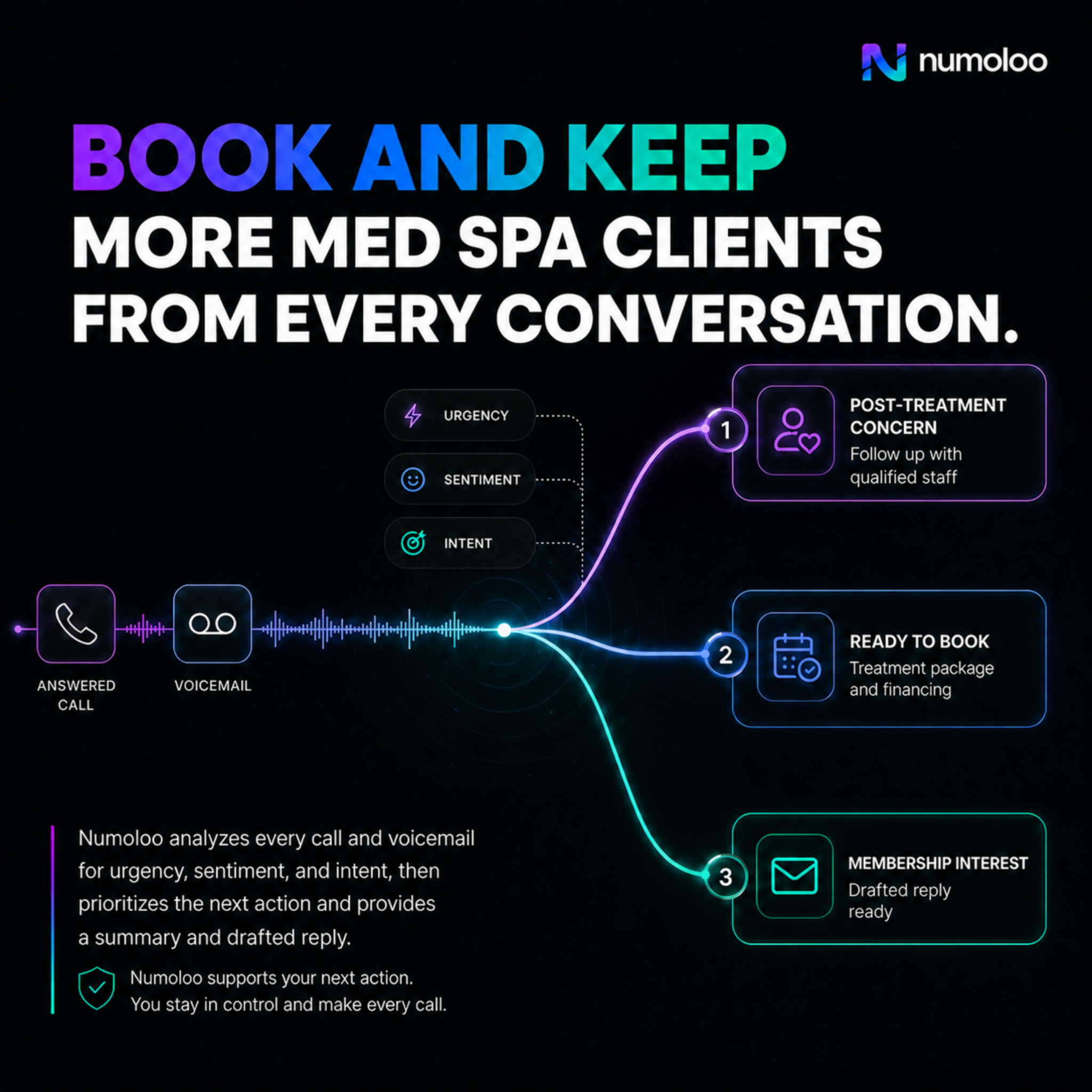
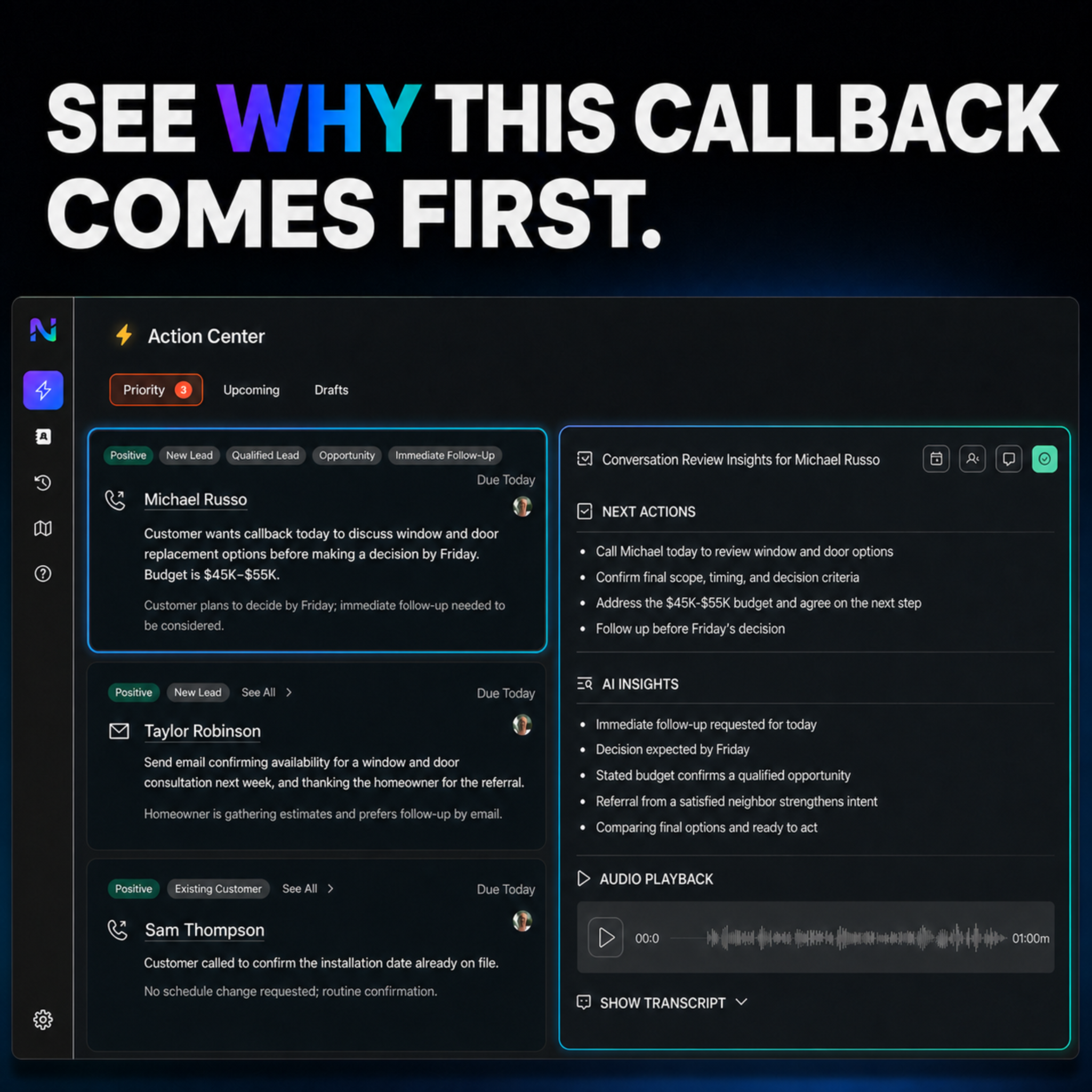
Numoloo analyzes your calls and voicemails and surfaces urgency, intent, and key details from each conversation. It highlights what matters so you know who to call first.
Here’s what that looks like in practice: a voicemail from March 25, 2026 where the caller says “our phones are blowing up, we’re losing bookings” gets flagged as higher priority than a casual product question. You don’t have to re-listen to ten voicemails to figure out who needs you most. The answer is already waiting.
At a glance, you see which conversations need attention first. This directly solves the problem of lead quality being invisible in your existing tools.
For small businesses and solo founders, this means fewer missed urgent callbacks, fewer deals going cold over the weekend, and fewer potential customers saying “we went with another provider because you didn’t get back to us.”
The system supports your sales process without replacing your judgment. It just makes sure the strongest signals, the ones buried in voice recordings, get surfaced before it’s too late.
Putting It All Together: From Chaos to a Clear Call List
Here’s how a typical day changes once you prioritize leads based on need, urgency, and readiness instead of guesswork.
Before: You open your inbox, start at the top, and work down. Whoever emailed most recently or left the most voicemails gets attention first. You feel busy but keep hearing that leads went with competitors.
After: You start the day with a ranked list of calls and voicemails sorted by urgency and intent. The voicemail from someone losing customers is at the top. The “just comparing options” inquiry is in the nurture queue. You contact highest priority leads first, and your conversion rates improve because you’re reaching qualified leads when they need you most.
The aim is not more calls or faster dialing. It’s fewer mistakes in the order of outreach, contacting the right person at the right time. The difference comes from working the same leads in the right order.
Start by writing your own priority rules tomorrow morning. Define what “Call First” means for your business. If you want help surfacing urgency and buying intent from calls and voicemails automatically, explore what Numoloo can do for your sales success.