Key Takeaways
- The real problem is not “speed to lead,” but choosing the wrong lead to call first when several come in at once.
- Missed calls, voicemails, and call transcripts all look similar in your system, even when the leads have very different urgency and intent.
- Prioritization should be based on what the lead needs, how urgent their situation is, and how ready they are to move.
- The right follow-up order comes from understanding what each lead actually needs, not just when they came in.
Why Your Real Estate Lead Follow Up Is Failing (Even If You Call Back Fast)
Most real estate agents know fast response matters. But conversion rates on portal leads remain low.
The problem is not speed. The problem is order.
When five to ten real estate leads hit your phone in one afternoon—from Zillow, yard sign calls, and voicemails—you have to decide who gets called first. Most agents call in the order contacts arrived. That’s where deals slip away.
- Example: An agent receives seven inquiries. Two portal leads say “interested in 3 beds.” Three voicemails say “call about listing.” Two sign calls show just phone numbers. The agent returns them from the CRM top to bottom. The problem? A casual Zillow browser gets called before a relocating buyer who left a detailed voicemail about needing to close within 30 days.
- A buyer with a 60-day deadline contracts with someone else while the agent spends time on low-intent contacts.
- “Speed to lead” advice ignores the real daily struggle: which leads will actually turn into signed agreements?
- That’s where deals are lost: missed listings, buyers going elsewhere, and time spent on low-intent leads.
Not All Leads Are Equal, But They All Look the Same Later
In your phone log, CRM, or email inbox, every new contact looks almost identical. You see a name, number, and a short note like “online inquiry – 3 bed” or “VM from yard sign.” Nothing shows who’s serious.
- Example 1: A seller voicemail says “thinking of listing next year.” Long-term nurture.
- Example 2: A buyer must be in a new school district before August, pre-approved. Needs a call today.
- Example 3: An investor asks about cap rates with no timeline. Could close eventually, but no urgency.
Without clear signals, converting leads becomes guesswork.
Why Missed Calls, Voicemails, and Transcripts Don’t Tell You Who To Call First
Every missed call and voicemail hides the real story.
- Missed calls show only a number, timestamp, and maybe “unknown caller.” That could be a $1.2 million listing ready to sign or a renter asking vague questions.
- Voicemails sound similar: “Hi, calling about the house on Oak Street.” But one caller’s lease ends soon and they’re pre-approved. Another just wants HOA fees.
- Even transcripts don’t flag urgency or readiness.
When you check voicemails at night, nothing stands out as “hot” or “can wait.”
Rethinking Real Estate Lead Follow Up: It’s About Priority, Not Just Speed
The key question isn’t “Did I respond fast?” It’s “Did I respond first to the person who needed me most today?”
Here’s an effective way to sort leads:
| Priority Factor | What It Means | Examples |
|---|---|---|
| What they need | Buying, selling, or investing | Active buyer vs. casual browser |
| How urgent | Timeline pressure | School start, lease end, job move |
| How ready | Financial and emotional readiness | Pre-approved, cash funds, already sold current home |
- High urgency: Seller meeting another agent tomorrow needs your call today.
- Low urgency: Neighbor asking about prices “for someday” goes into nurture.
Think in tiers:
- Call now: Imminent moves, expiring leases, competing agents involved.
- Call today: Clear budgets, near-term timelines.
- Nurture this week: Long-term curiosity, no timeline.
Sorting calls this way alone can improve conversion rates by 15-20%.
Building a Real-World Lead Follow Up Flow For Your Day
It’s 4 p.m. You have nine new contacts from the last 24 hours. Who gets called first?
Step 1: Identify high-urgency leads
- Relocation with deadline.
- Expiring lease mentioned.
- Listing appointment requested soon.
- Mention of “meeting another agent.”
Step 2: Call medium-term leads
- Clear budget stated.
- Specific timeline like “need to list by June 1.”
- Pre-approval mentioned.
Step 3: Handle low-intent leads last
- General questions with no timeline.
- “Someday” language.
- Casual property inquiries.
Signals of urgency agents hear in voicemails and calls:
- Job transfers (“starting new position in Austin”).
- School deadlines (“before August”).
- Lease end dates (“notice given to landlord”).
- Already under contract on next place.
Signals of readiness:
- “Pre-approved up to $750,000.”
- “We have cash from selling our last home.”
- “Need to close in 60 days.”
Stop working your list strictly by “newest first” or lead source. Group calls by urgency and readiness before dialing. This improves your chances of closing deals.
Where Numoloo Fits Into Your Real Estate Lead Follow Up
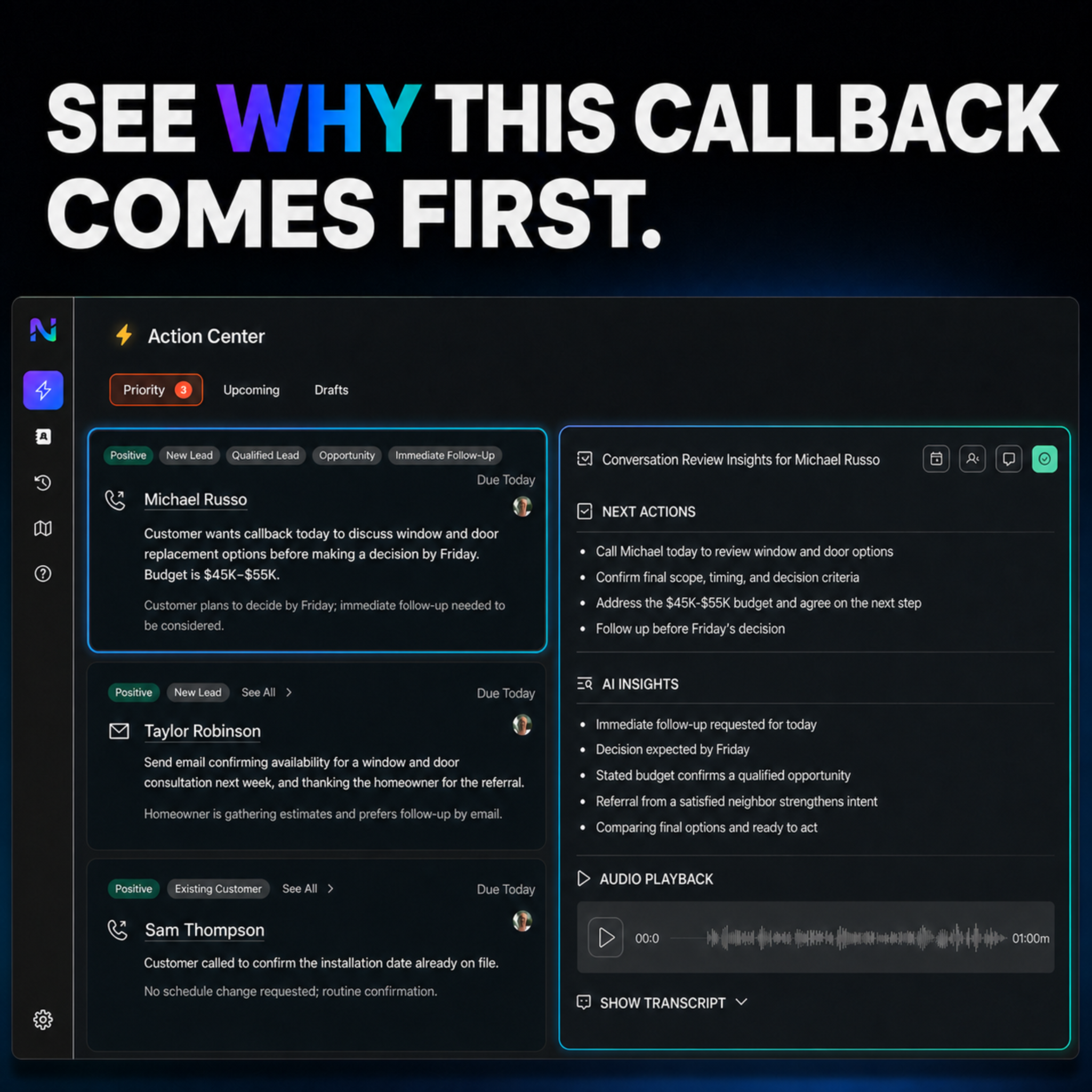
Numoloo analyzes your calls and voicemails from buyers, sellers, and referral partners. It pulls out urgency, sentiment, and intent from each conversation and highlights which people you should call first.
For example, after an open house weekend, you log in Monday morning. Numoloo has summarized your voicemails and highlighted the people you should call first. The rest are sorted for later follow-up.
Instead of sorting through all voicemails yourself, Numoloo gives you clear next steps. This helps you focus on calls that close deals, not just the newest calls.
The result is fewer lost buyers and sellers and more closed deals. You stop working your list in order and start calling the right people first.