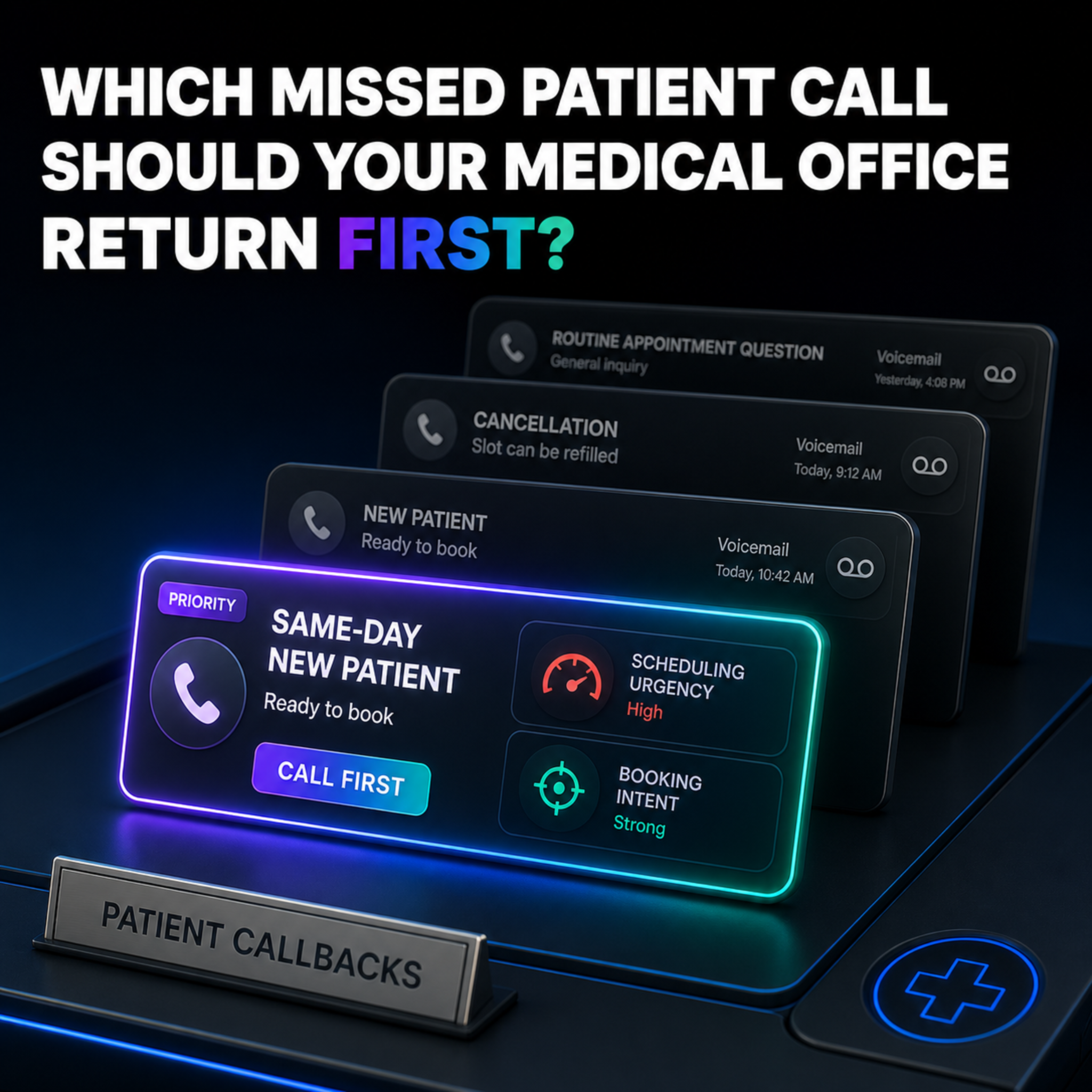
Arrival order is the default: first call in, first call back. The caller who needs you today and the account about to cancel take the same place in line as a routine question, no matter which one is worth the most. That order puts your revenue and your customers at risk, and no software earns the right to reorder it unless you can see how it decides.
Numoloo is a callback prioritization platform made for that decision. After every inbound call, outbound call, and voicemail, it detects urgency, sentiment, and intent, then prioritizes the next action. Ordering calls by what the caller needs instead of when they arrived is what callback prioritization means.
To see how Numoloo works and whether its order is worth trusting, it helps to know how it decides and where the logic came from. Founder Rick Dionisio spent twenty years in telecom and subscription software running phone operations for small businesses, so the prioritization came from the problem itself, not a generic template.
This piece starts with how Numoloo makes the order, then puts it to two questions that decide whether any such order is worth trusting: does it work from the whole conversation, and what does it do when a call is unclear?
Key Takeaways
- Numoloo is a callback prioritization platform that detects urgency, sentiment, and intent across every call and voicemail, then prioritizes the next action. You make every call.
- The order reflects what the caller needs, not the time they called, so the message that needed you most does not come back last.
- Calling is native to Numoloo, so it judges from the full conversation instead of a partial record.
- The analysis engine is model-agnostic, so Numoloo can adopt better models over time without rebuilding the product.
- If a model cannot draft a response, Numoloo still delivers the summary and prioritized next action. The draft is the only part that may not be generated.
- Founder Rick Dionisio created Numoloo with development partner DigitSense. It launched in June 2026 across the United States and Canada.
How Numoloo works after each call and voicemail
The order you work in is only as good as what the platform understood from the call. After each inbound call, outbound call, and voicemail, Numoloo does four things:
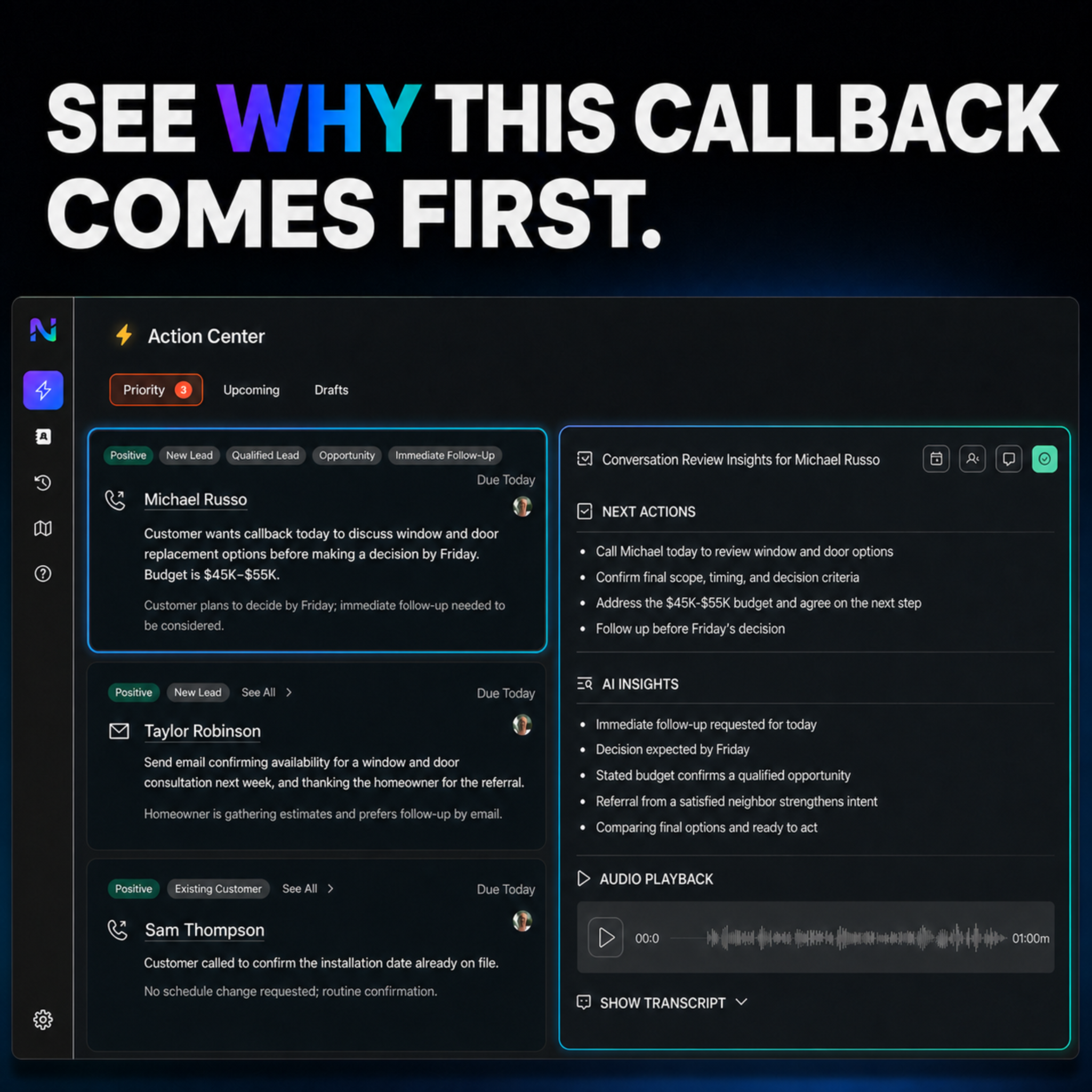
- Detects how urgent the call is, how the caller sounds, and what they want from what was said on the call. Recognizing customer intent on a call is its own skill, and it is the input the order depends on.
- Tags the conversation with the reason it counts, such as decision-maker, qualified lead, or escalation, so you see what needs attention now and what can wait.
- Prioritizes the callback order against everything else waiting, and updates it as new calls come in.
- Drafts a summary and a response email from what the caller said, ready for you to review and send.
Each tag names the reason, so the order is not a mystery. You can see why a call is near the top before you dial.
Does Numoloo work from the whole conversation?
Judging a call well takes the whole conversation, not a fragment of it. That is why calling is part of Numoloo rather than a layer on top of a separate phone service.
Numoloo handles number selection, call handling, and voicemail capture as part of the platform, so the analysis runs on the full call every time. Catching the call is table stakes. Having all of it, so the order reflects what really happened, is the part that makes the priority reliable.
What happens when a model gets a call wrong?
This is the honest question, and it is the one most tools skip. Software makes mistakes, and you should know what happens on the day it does.
Numoloo's analysis engine is modular and model-agnostic. Models improve fast, and tying the platform to one would narrow what Numoloo can adopt later, so a better model can go in without reworking the product around it.
The design also assumes models fail. If a model cannot return a draft, Numoloo still delivers the summary and the next action. The draft email is the only part that might not generate, and the part you most need, knowing who to call back and why, still reaches you.
| Design decision | What it means | Why it matters for your callbacks |
|---|---|---|
| Native calling | Calling, number selection, and voicemail capture are part of Numoloo | The order reflects the full conversation, not a partial record |
| Model-agnostic engine | The analysis engine is modular, not tied to one model | Numoloo adopts better models over time without a rebuild |
| Graceful failure | If a model cannot draft a reply, the summary and priority still arrive | You always get who to call back and why, even on an off day |
So can you trust Numoloo's callback order?
The order is a tool for a decision you already own, not a replacement for it. Numoloo prioritizes what the caller needs, shows you the reason in the tags, works from the full conversation, and keeps delivering the priority and the summary even when a draft does not generate.
It works with any CRM, or none, so a solo contractor and a five-person practice use it the same way. Prioritized actions, summaries, and drafts reach your inbox or the Numoloo dashboard, and you make every call. Numoloo never calls, dials, or contacts anyone.
Try Numoloo free for 14 days. No credit card required.
Frequently Asked Questions
How does Numoloo work?
Numoloo analyzes every call and voicemail for urgency, sentiment, and intent, then prioritizes which callback to make first. You make and receive calls in Numoloo, and for each conversation it delivers structured insights, a summary, prioritized next actions, and a pre-drafted email grounded in the content and context of the call.
How is Numoloo different from an AI receptionist or answering service?
An AI receptionist answers your calls with a virtual agent. With Numoloo, your customers always reach you, a real person, and Numoloo prioritizes your callbacks so you return the highest-stakes conversations first, before you lose that revenue.
Do I make the calls, or does Numoloo?
You do. Every time. Numoloo never dials or contacts anyone on its own, so you keep control of your customer relationships and the timing of every callback. Numoloo prioritizes each one and shows you the context first, so the decision stays yours and you go into every call with the full picture.
Why does Numoloo handle calling natively instead of working as a separate integration?
Numoloo manages calling, number selection, and voicemail capture natively so its analysis engine runs on the complete, uninterrupted conversation. By evaluating the entire conversation within the platform rather than relying on external handoffs, Numoloo captures the true context, urgency, and intent needed to build a reliable callback order.
Is Numoloo tied to a single AI model for call analysis?
No. Numoloo's analysis engine is model-agnostic, meaning the platform can adopt stronger, faster models as AI technology improves without disrupting the daily callback workflow.
What happens if Numoloo cannot generate a draft response for a call?
If a model runs into an issue and fails to draft a reply, your workflow doesn't stop. You still get the call summary, the urgency tags, and the prioritized next step delivered to your dashboard, so you always know who to call back and why, even if a draft email doesn't generate.
The order is only worth trusting if you can see why
A callback order you cannot question is just another guess. The bar for any tool that reorders your calls is that it shows you why each one is where it is, so you can act on the order without second-guessing it.
That is the bar Numoloo is made to clear. Would you trust the order in front of you if you could not see why each call was on it?