Returning calls in the order they arrived is a major mistake for growing businesses. This method is called FIFO (First-In, First-Out) and it treats every caller the same, no matter what they need.
When you follow a chronological list, your best prospects wait. A caller ready to book a high-value contract sits behind three voicemails asking for directions. A frustrated client about to cancel sits behind a routine follow-up. By the time you call back the lead that matters, they have already moved on to a competitor.
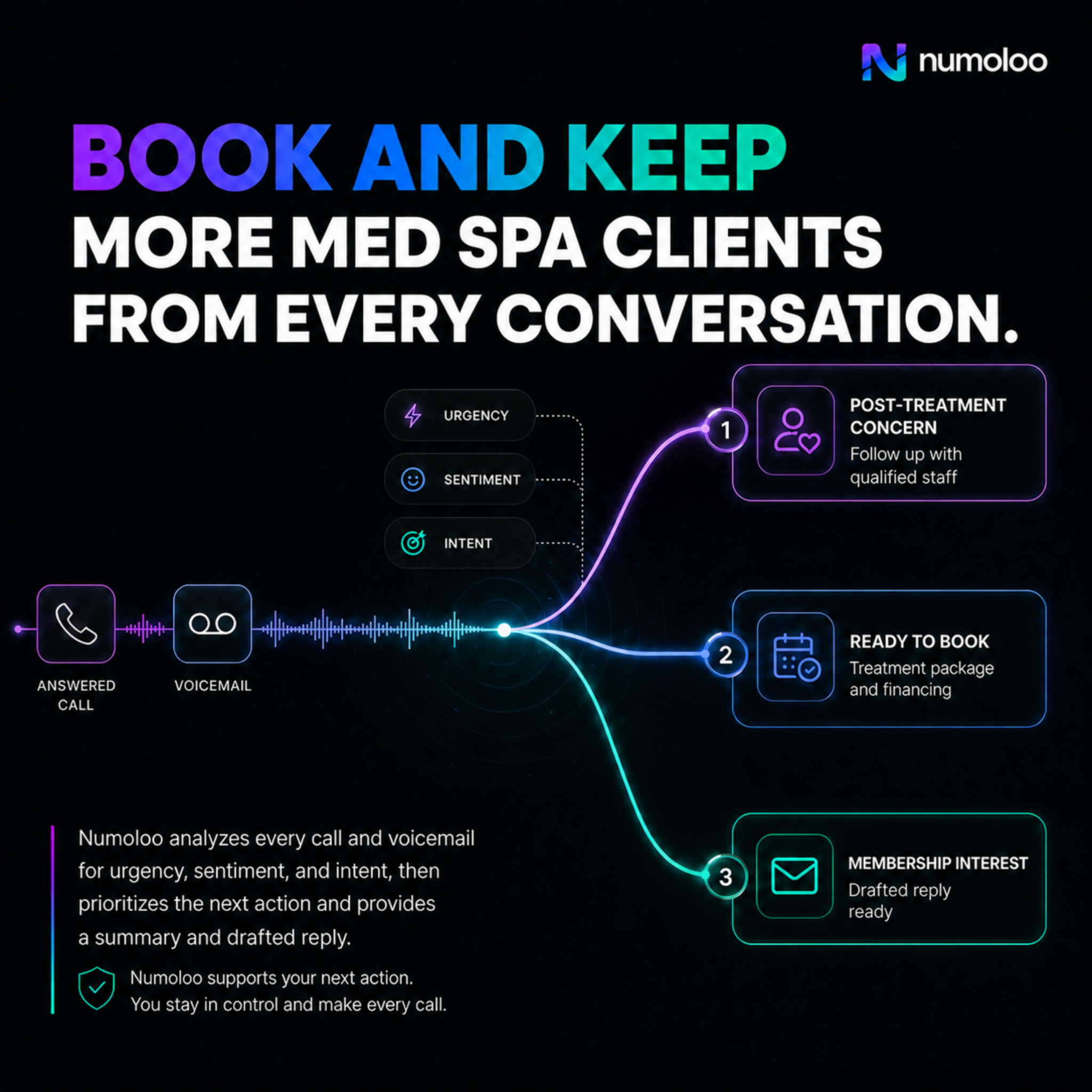
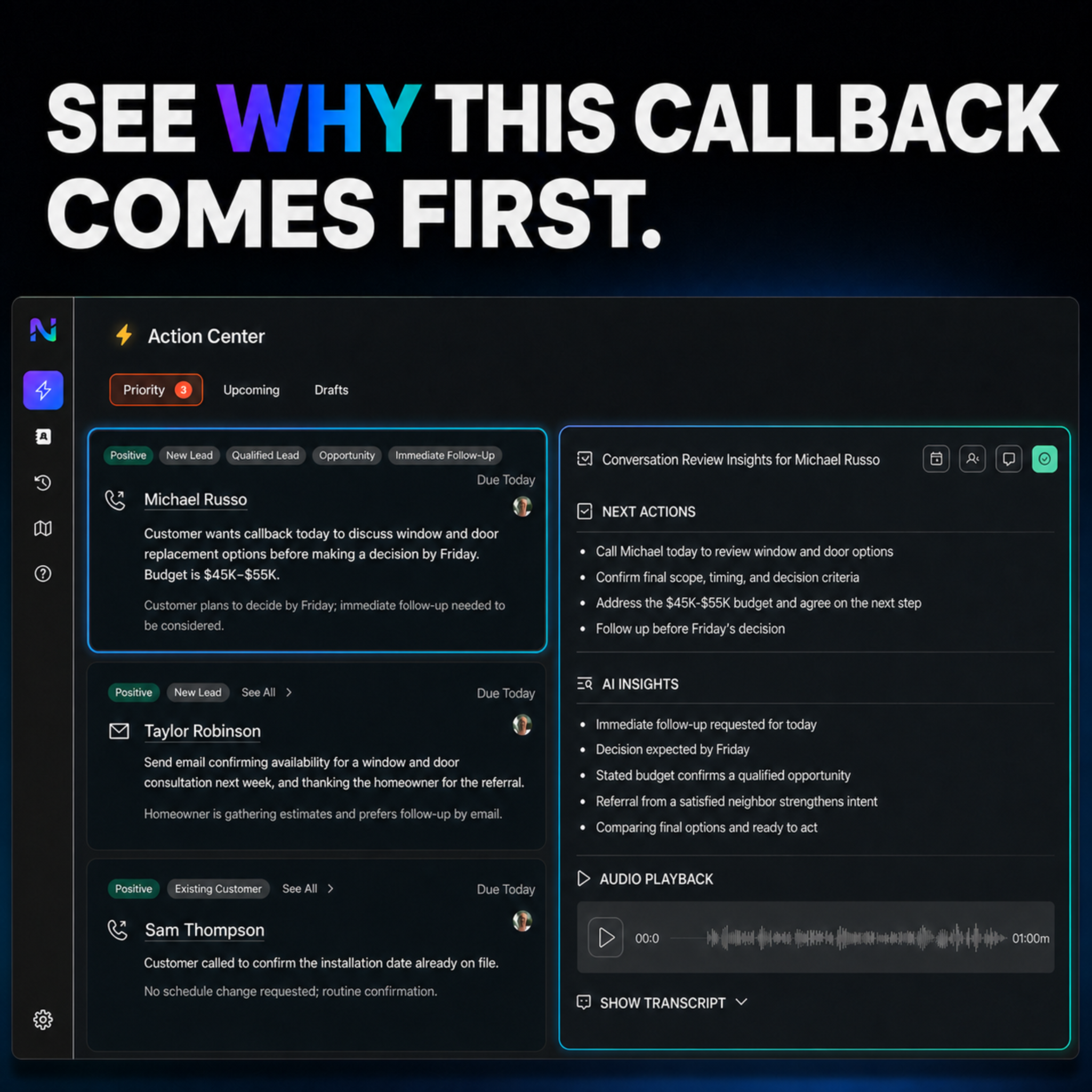
You make and receive your calls directly in Numoloo. After every call and voicemail, it detects urgency, sentiment, and intent to surface which conversation needs attention first.
What Callback Prioritization Means
Callback prioritization weighs every live inbound call, outbound call, and voicemail by urgency, sentiment, and intent. The next action might be a deal to close, a customer to keep, or an issue to address before it gets worse.
A first-time pricing question is not the same as a customer ready to sign. A scheduling ask is not the same as a frustrated client about to leave. Three inputs drive the priority:
- Urgency: How time-sensitive the caller's situation is.
- Sentiment: Whether the caller is calm, frustrated, anxious, or ready to act.
- Intent: What the caller wants to happen next.
Numoloo analyzes these factors. It delivers your next action, a summary, and a pre-drafted response to your dashboard, Slack, or email. The priority updates as new calls come in.
Why FIFO Costs You Revenue
First-in-first-out is the default in almost every business that runs on the phone. You work calls and voicemails in the order they came in. The order has nothing to do with urgency, sentiment, or intent.
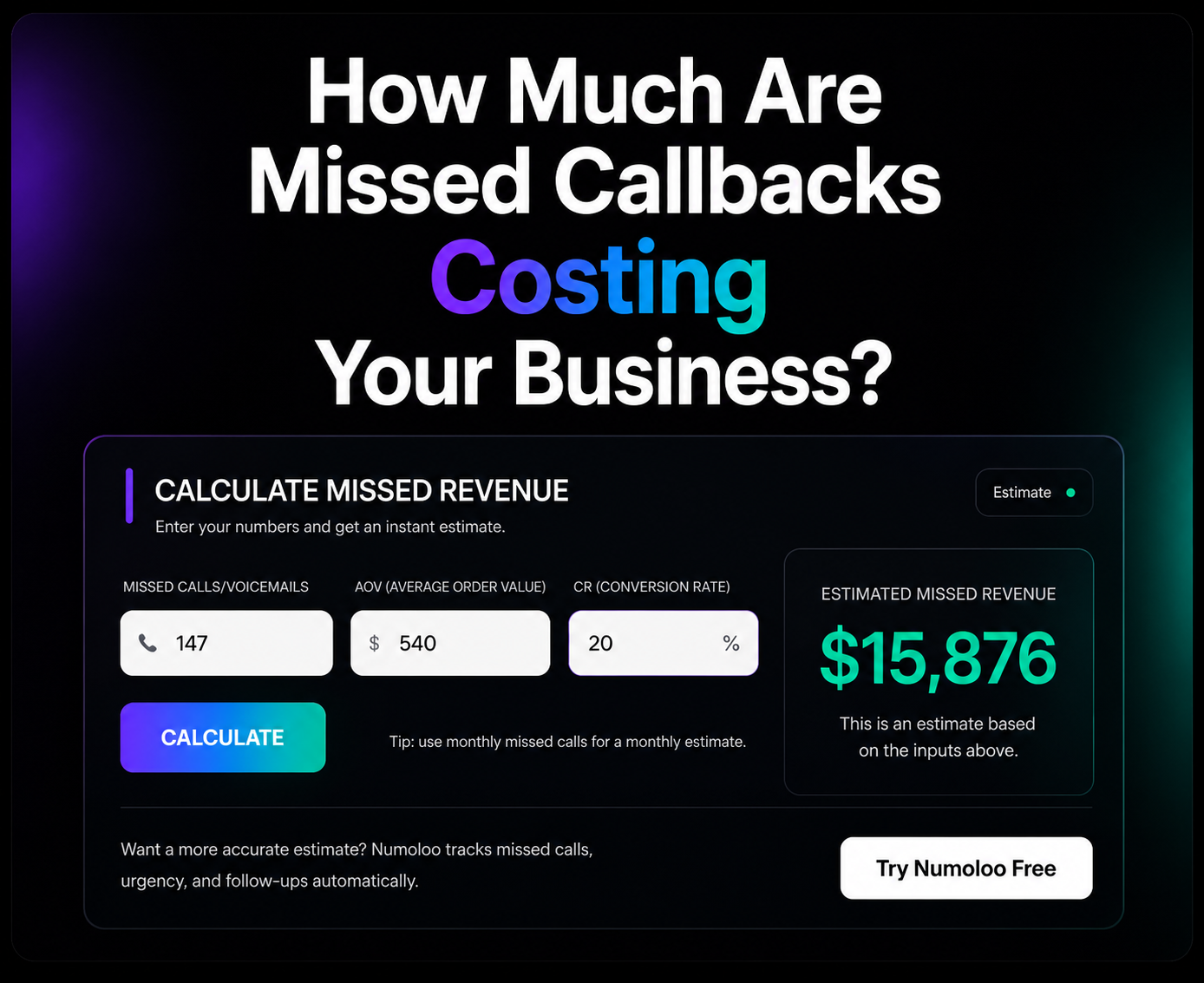
About 62% of calls to small and mid-sized businesses go unanswered the first time. 85% of customers who reach voicemail and never get a callback never call back a second time. The lost revenue sits in last week's callback list, in the wrong order.
- Real estate agents lose listings when someone else gets to the serious buyer or seller first.
- Home service contractors lose jobs addressing calls in the order they came in, often missing the higher-value jobs or losing them to a competitor that reached out before you did.
- Clinics and med spas lose premium bookings when ready-to-schedule patients are treated the same as general inquiries.
- Consultants and agencies lose retainers when serious prospects wait while routine requests get answered first.
- Sales and support teams lose deals and renewals when urgent buyers and unhappy customers are not prioritized quickly enough.
Urgency, Sentiment, and Intent in Practice
Urgency lives in the language of the call. "I need to make an offer by Friday" outranks "we're thinking about looking next spring." "No heat, kids at home, can someone come tonight" runs ahead of "what's your availability for a tune-up next month." Urgency does not always sound urgent. A short, calm voicemail about a deadline can carry more weight than a long, agitated complaint.
Sentiment lives in the emotional tone. A repeat client whose tone shifts from warm to cold across two calls is a relationship at risk. A frustrated customer whose install was delayed needs an owner or senior tech, not the next available rep. A retainer client who sounds disengaged on a status call is a churn risk.
Intent lives in what the caller wants to happen next. A buyer comparing two listings has a different intent from a buyer ready to write an offer. A homeowner pricing a system replacement has a different intent from one scheduling a known repair. An economic buyer asking for a deeper discussion has a different intent from a champion asking for collateral. Pre-drafted responses match the caller's intent. No rewriting needed.
Manual Review vs Numoloo
Manual prioritization works at low volume. A solo agent with eight voicemails a week can listen, take notes, and prioritize by feel. The model breaks at scale. Listening to every voicemail and re-reading every call note takes hours a week. Two reps reviewing the same list produce two different orders. Volume spikes break the system.
Numoloo analyzes every live call and voicemail the same way every time. The prioritization does not drift. Every conversation comes back with urgency, sentiment, intent, and a summary. You work the conversation that needs attention first.
| Dimension | Manual Review | Numoloo |
|---|---|---|
| Speed | Hours per day spent listening and reading | Minutes. Analysis happens the moment a call lands. |
| Accuracy | Drifts with reviewer fatigue and bias | Consistent prioritization across every call. |
| Consistency | Two reps produce two different orders | Same analysis. Same priority for every reviewer. |
| Scalability | Breaks at volume and skipped on busy days | Volume does not change the output. |
The Cost in Each Segment
Returning calls in arrival order treats every conversation the same, no matter what's inside. The cost looks different across the businesses Numoloo serves:
- Real estate: a missed buyer-ready callback loses a commission, and a delayed response to a frustrated client loses the relationship.
- Home services: a missed high-ticket install becomes someone else's job, and a missed emergency call costs a customer.
- Clinics and med spas: a new patient ready to book books with the next clinic that picks up, and a post-procedure concern goes unanswered.
- Consultants and agencies: a high-intent prospect signs a retainer with a competitor, and a churn-risk client stops responding.
- Sales and customer support: a deal in evaluation closes with a competitor, and a churn-risk account walks out the door.
You make and receive calls directly in Numoloo. It analyzes every call and voicemail for urgency, sentiment, and intent, prioritizes which conversation needs attention first, and delivers structured insights and pre-drafted emails to your dashboard, Slack, or email. CRM-agnostic. No sales infrastructure required.
Try it free for 14 days. No credit card required.
Frequently Asked Questions
What is callback prioritization? Callback prioritization weighs every live inbound call, outbound call, and voicemail by urgency, sentiment, and intent, then surfaces which conversation needs your attention first.
How does Numoloo prioritize calls? Numoloo analyzes every live inbound call, outbound call, and voicemail for urgency, sentiment, and intent, then dynamically prioritizes your next action.
Does Numoloo work without a CRM? Yes. Numoloo is CRM-agnostic and requires no sales infrastructure. It delivers insights to your dashboard, Slack, or email.
Where do Numoloo's insights show up? Insights show up in your dashboard, Slack, or email. Each conversation comes back with urgency, sentiment, intent, a summary, and a pre-drafted response.
Who is Numoloo for? Numoloo serves real estate professionals, home service contractors, clinics and med spas, consultants and agencies, and sales or customer support teams. It fits any business where revenue or retention depends on phone calls.