Most support callback lists follow the arrival order. Whoever called first hears back first, regardless of what each customer needs. A customer with a serious problem waits while you answer a quick question.
Callback prioritization is ordering callbacks by the urgency, sentiment, and intent of each conversation instead of the time each call arrived. Numoloo, a callback prioritization platform, analyzes every call and voicemail, prioritizes the conversations that need attention first, and drafts a response email for each one.
The difference shows in retention. A customer raising the same issue for the third time needs a callback before someone asking where to find a setting, and a customer who sounds fed up needs a response before a routine request. Arrival time ignores both.
Key Takeaways
- Arrival order sequences support callbacks by timestamp and tells you nothing about what each customer needs.
- Urgency, sentiment, and intent give you a stronger callback order than the time a call came in.
- A repeat contact, frustrated language, or cancellation intent belongs at the top of the callback list.
- More than 50 percent of consumers will switch to a competitor after one bad service experience, according to Zendesk Benchmark data.
- Numoloo analyzes every call and voicemail, prioritizes the callback order, and drafts a reply for each conversation.
Why Does the Arrival Order Fail for Support Callbacks?
A timestamp records when a customer called, and nothing else. Zendesk Benchmark data reports that more than 50 percent of consumers will switch to a competitor after one bad service experience, and 73 percent will switch after several. The customer most likely to leave is the one with the serious, unresolved, or repeated problem, and arrival order gives that customer no priority at all.
A billing complaint from an account that stopped using the product months ago is a cancellation in progress. A friendly check-in can wait a day without consequence. In arrival order, the check-in often comes first.
What Should Decide Which Customer You Call Back First?
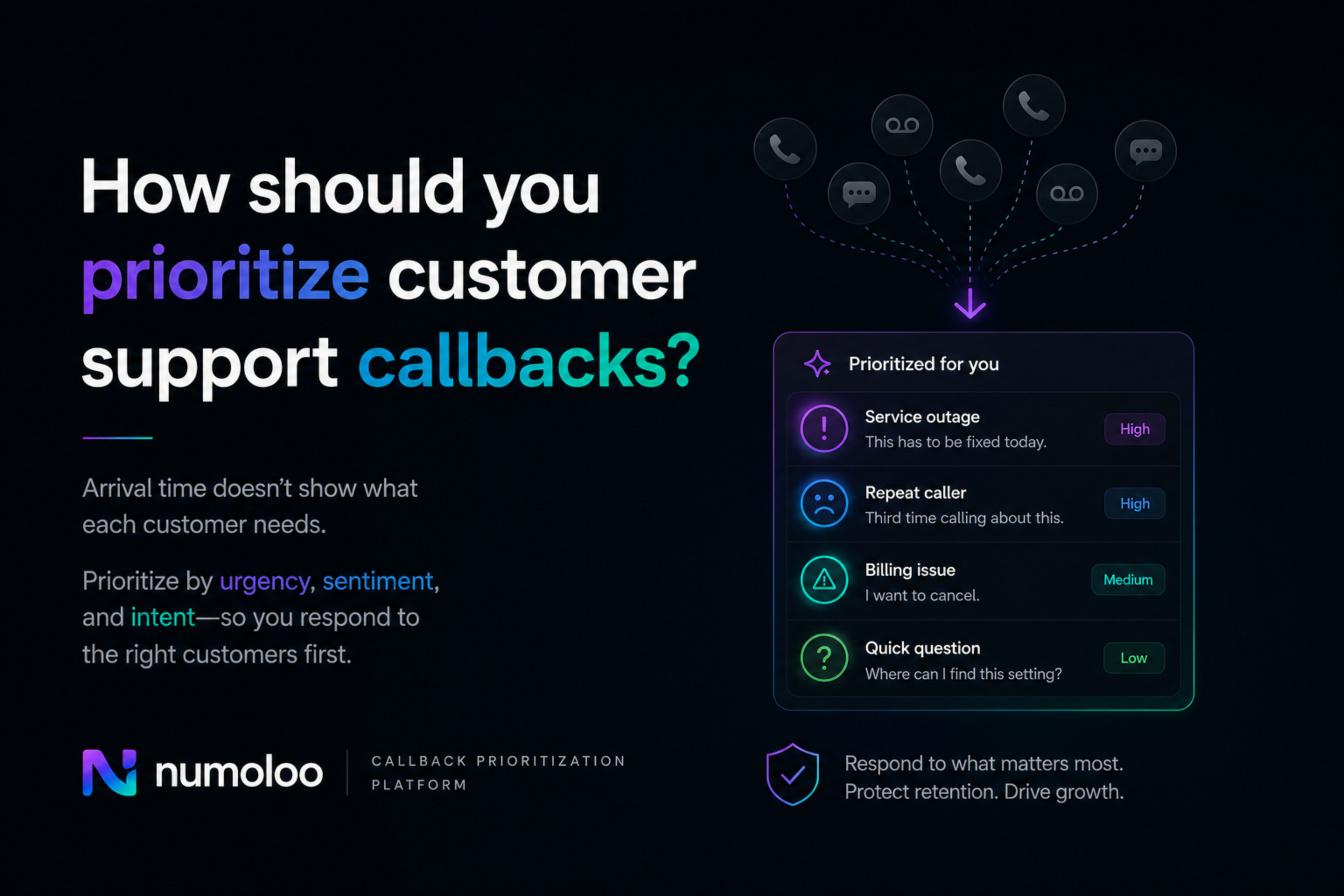
Three attributes in the conversation set a better order:
- Urgency. Deadline language, an outage description, or a phrase like "this has to work by Friday" separates a time-critical callback from one that can wait until tomorrow.
- Sentiment. Frustration lives in the wording of a call. "This is the third time I'm calling about this" marks a customer far closer to leaving than the words of a routine request do.
- Intent. A customer calling to cancel, dispute a bill, or escalate a problem needs a different response, and a faster one, than a customer asking about a setting.
History adds a fourth. A second or third contact about the same issue means the first response failed, and each repeat raises the chance the next call goes to a competitor.
How Is Callback Prioritization Different From Help Desk Software?
Help desk platforms organize written requests well, but calls and voicemails rarely enter them with any structure. Transcription turns a voicemail into text, and recording stores the audio, but neither tells you which conversation to return first.
| Tool | What it does | What it produces | Where it falls short for callbacks |
|---|---|---|---|
| Help desk ticketing | Organizes written requests into tickets with statuses | A ticket list, often ordered by age or SLA timer | Calls and voicemails rarely enter it with urgency or sentiment attached |
| Voicemail transcription | Converts voicemail audio to text | A transcript per message | You still read every transcript to judge which one is urgent |
| Call recording | Stores the audio of each call | A searchable archive | Storage without interpretation, and no callback order |
| Callback prioritization | Analyzes each call and voicemail for urgency, sentiment, and intent | A prioritized callback list with a drafted reply per conversation | Purpose-built for deciding who hears back first |
The first three tools capture information. Callback prioritization interprets it and turns it into an order you can act on.
How Does Numoloo Prioritize Support Callbacks?
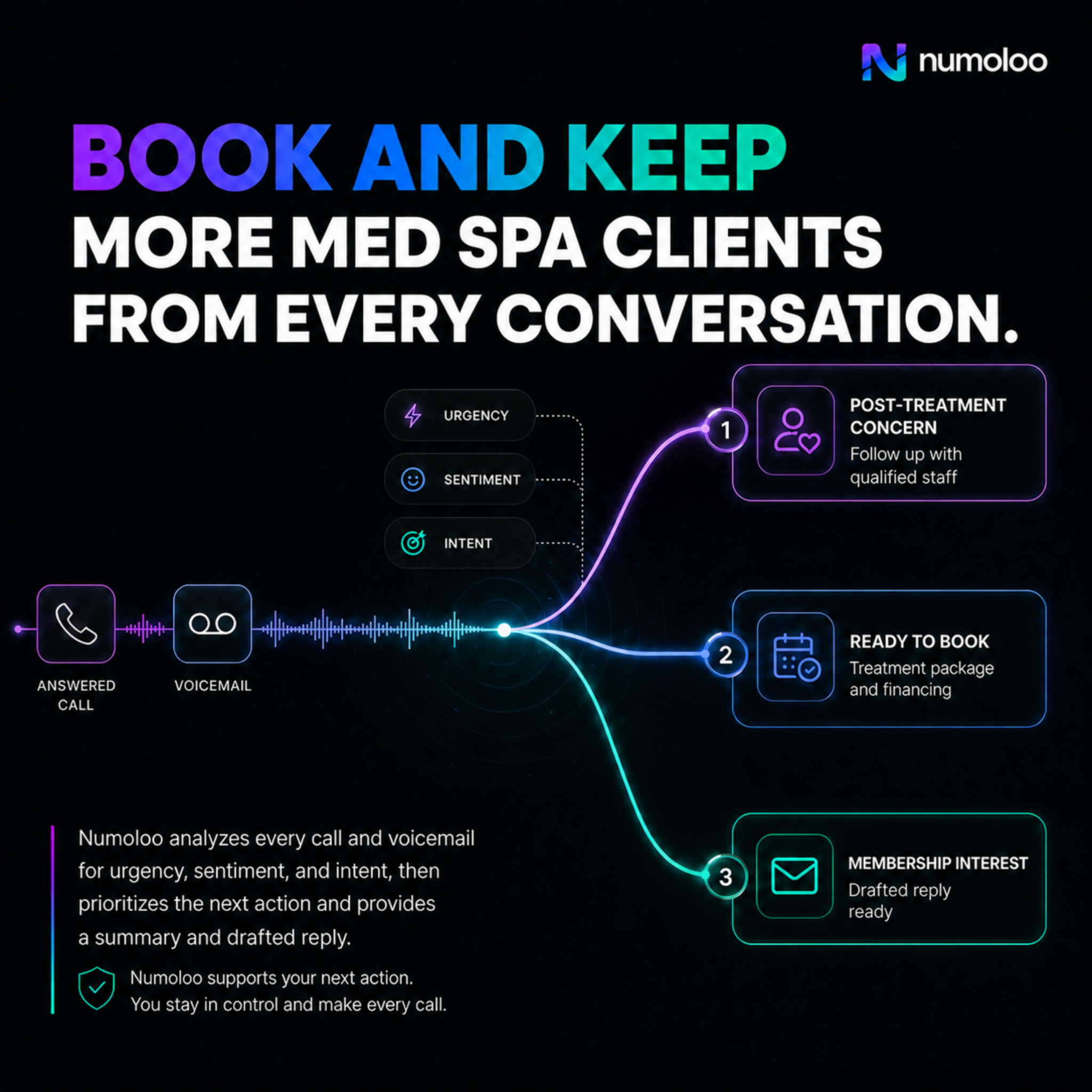
Calls and voicemails happen in Numoloo. You make and receive calls directly in the platform, and Numoloo captures voicemails without manual setup. Numoloo then analyzes every call and voicemail to detect urgency, sentiment, and intent, and dynamically prioritizes which conversation needs attention first.
For each conversation, you get:
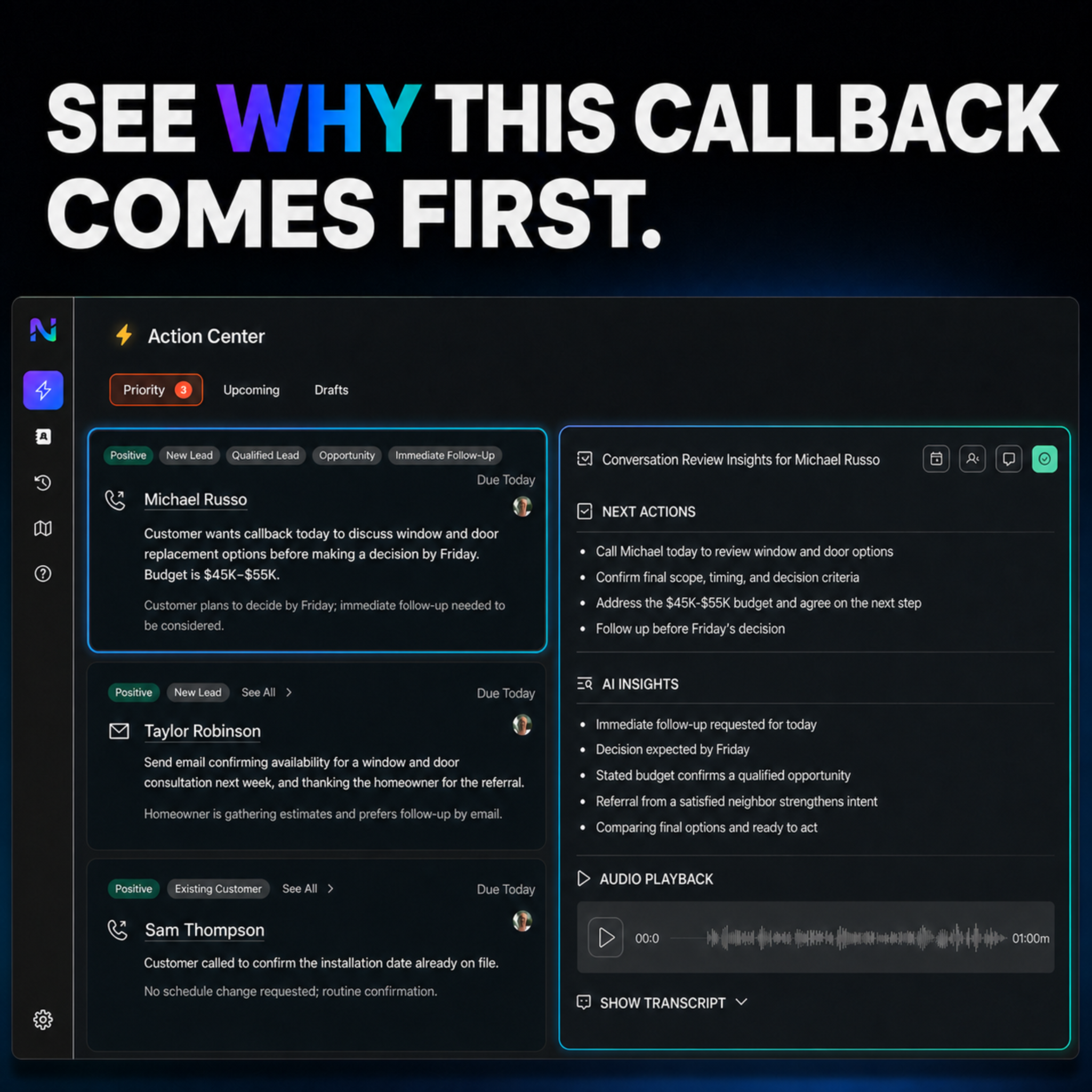
- A prioritized callback list. The customer with the most at stake appears at the top, whether that stake is an escalation, a cancellation risk, or a service failure.
- A summary of each conversation. You know what the customer said and how they said it before you dial.
- A pre-drafted response email. You review the drafted reply and send it, so you respond to the right customer first, and faster.
Numoloo is CRM-agnostic and requires no sales infrastructure, which fits support work whether you handle the phone yourself or run a full sales and customer support team.
Try Numoloo free for 14 days. No credit card required.
What is the best way to prioritize customer support callbacks?
Order callbacks by the urgency, sentiment, and intent of each conversation. A customer with a time-critical problem, frustrated language, or cancellation intent hears back before a routine question. Arrival time is the weakest available ordering criterion.
Should support calls be returned in the order they came in?
No. Arrival order treats a serious problem and a quick question as equals, so the customer with the most at stake often waits the longest. It works only when the stakes behind every callback are similar, which is rare in support.
How do you identify an urgent customer call?
Listen for deadline language, outage or failure descriptions, repeat contact about the same issue, and cancellation or dispute intent. Each of these separates a callback that cannot wait from one that can. Numoloo detects these attributes in every call and voicemail so you skip reviewing each recording yourself.
What is callback prioritization?
Callback prioritization is the practice of ordering callbacks by what each conversation contains: its urgency, its sentiment, and its intent. It replaces the arrival order with an order that reflects what each customer needs. A callback prioritization platform such as Numoloo performs the analysis and keeps the list current.
How does Numoloo decide which callback comes first?
Numoloo analyzes every call and voicemail to detect urgency, sentiment, and intent, then dynamically prioritizes which conversation needs attention first. The most urgent customer appears at the top of your list with a summary and a pre-drafted response email.
Does callback prioritization replace a help desk?
No. A help desk organizes written tickets, and callback prioritization decides which phone conversation you return first. Many support operations run both, with the callback list covering the phone work that never enters the ticketing tool.
Conclusion
The urgency, the history, and the frustration are already in the call. Prioritizing the right support call is how you protect a customer relationship.
Does your callback order reflect what each customer needs, or the time each one happened to call?