Call the lead back fast and you win the job. You have heard that advice a hundred times, and you have tried to live by it. It still is not enough.
You finish a job at 2 p.m. on a Wednesday and check your phone: six missed calls, four voicemails. One is a homeowner price-shopping a job you would be fine losing. One is a property manager with a flooded unit who needs someone today and is dialing your competitors while you stand there. Work the list from the top and you reach the flooded unit fifth. By then she had booked someone else.
Speed to lead tells you to call all six back as fast as you can. It says nothing about which one to call first.
That second question decides whether you keep the flooded-unit job, and callback prioritization is how you answer it.
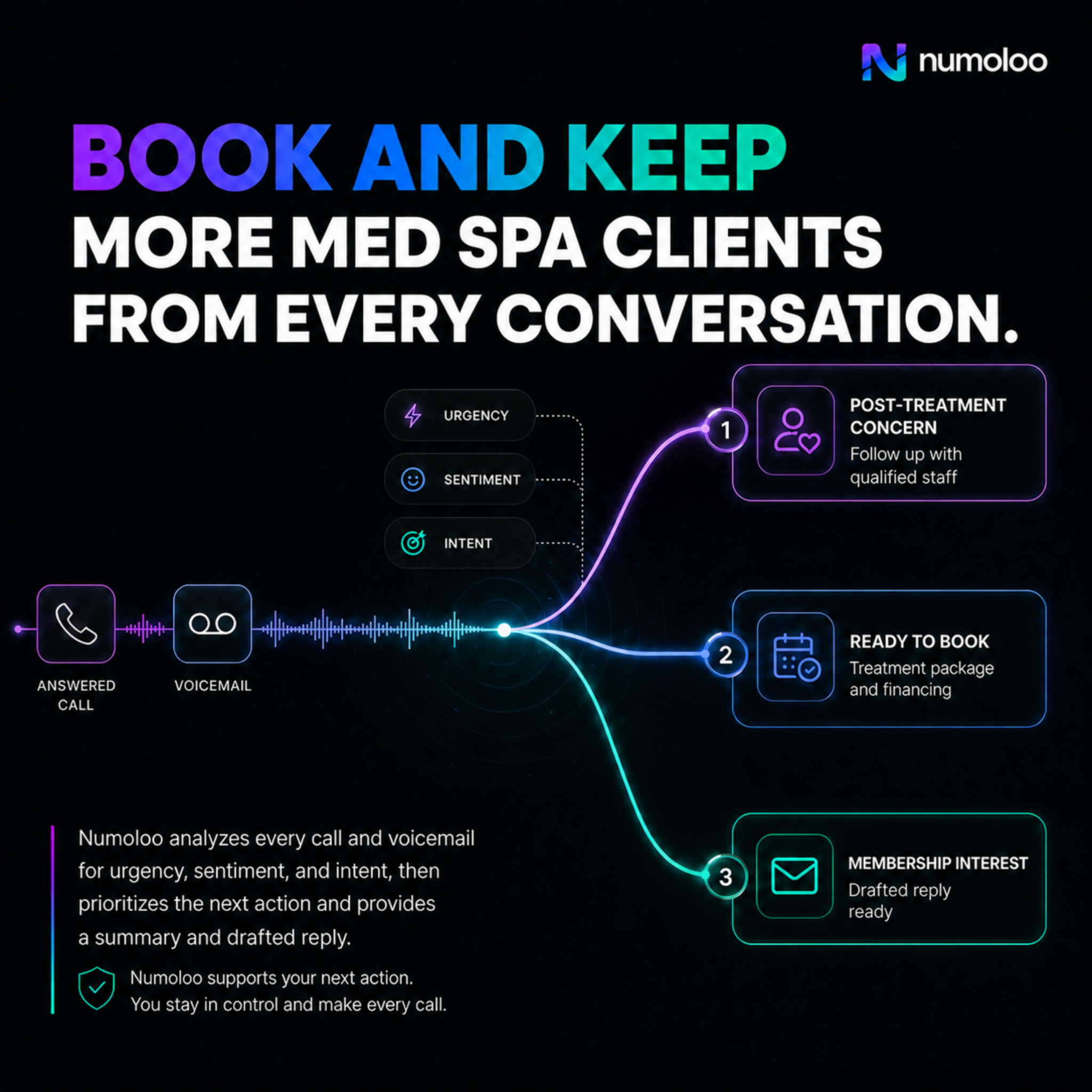
Numoloo is a callback prioritization platform that turns every conversation into a revenue opportunity. It analyzes each call and voicemail to detect urgency, sentiment, and intent, then orders your callbacks by who most needs to hear from you now.
Speed to lead is about how fast you respond. Callback prioritization is about who you respond to first when you cannot get to everyone at once.
Both want the same thing: no more work lost to slow or out-of-order follow-up. They fix different parts of the problem.
Key Takeaways
- Speed to lead measures response time. The faster you reach a new inquiry the better your odds, but only when someone is free to make the call.
- Callback prioritization measures response order. When you cannot answer every call instantly, the sequence you return them in changes how much work you keep.
- Phone-driven businesses rarely control speed. You miss calls while doing billable work, so instant response is often off the table.
- Order is the lever you control. You choose who to call back first every time you pick up the phone after a busy stretch.
- Numoloo prioritizes by urgency, sentiment, and intent. It reads each call and voicemail, then tells you which return call deserves attention first.
What Is Speed To Lead?
Speed to lead is the practice of contacting a new inquiry as fast as possible after it arrives. It comes out of inside sales, where a rep watches web forms land and the clock starts the second someone fills one out.
The faster the rep dials, the more often they catch the person while the need is fresh, and the more deals they close.
For a sales rep staring at a screen of new form fills, this is sound advice. Dial the newest one first, and dial it now.
The approach works on one condition: someone is sitting there, free to call the instant the inquiry lands.
Most phone-driven businesses cannot count on that, because the person who would make the call is the one doing the paid work.
What Is Callback Prioritization?
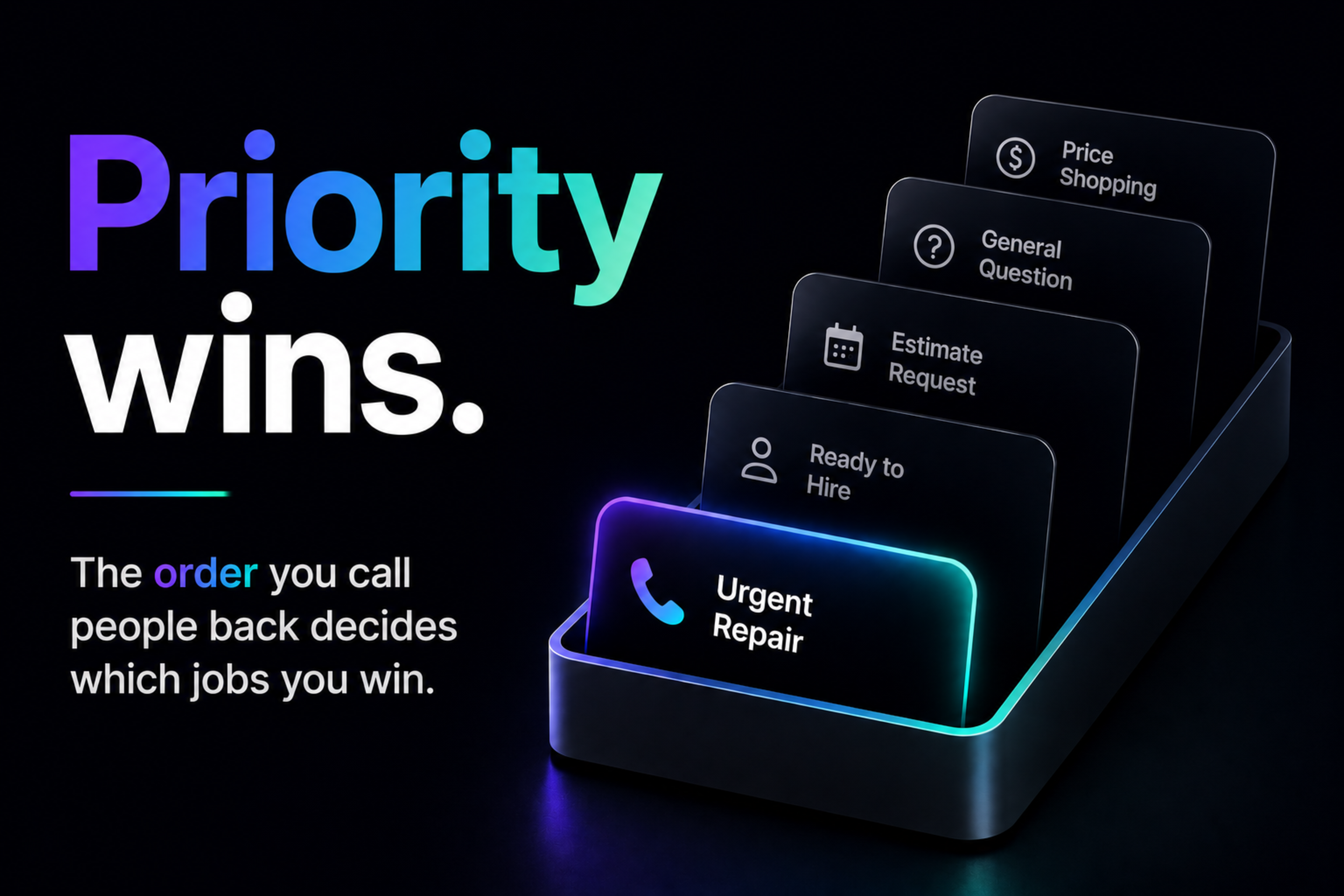
Callback prioritization is the practice of deciding which calls and voicemails to return first based on what each caller needs, rather than the order the calls arrived.
It starts from a different reality: you have ten missed calls and two hours, and the order you work through them changes how much of that work you keep.
With a first-in, first-out approach, you treat every missed call as equal. You call back the 9 a.m. caller who left a vague message before the 11 a.m. caller who described an urgent problem and asked you to call today.
Callback prioritization flips that. You make the most pressing return call first, regardless of when it came in.
This is the layer Numoloo owns. Numoloo reads each call and voicemail for how urgent the request is, how the caller feels, and what they want, then puts your callbacks in the order that keeps the most work on your books.
How Are Speed To Lead And Callback Prioritization Different?
Speed to lead and callback prioritization answer two different questions. One asks how fast you can respond. The other asks who you should respond to first.
The table below sets them side by side.
| Speed to Lead | Callback Prioritization | |
|---|---|---|
| Core question | How fast can you respond? | Who should you respond to first? |
| Optimizes | Response time | Response order |
| Assumes | Someone is free to answer instantly | You return calls in batches after missing them |
| Best fit | Inside sales with staffed phones | Owners and operators who miss calls while working |
| Starting point | A new inquiry arrives | Calls and voicemails you already missed |
| Risk it reduces | A slow first response | Returning calls in the wrong order |
Speed to lead optimizes the front of the conversation, before you have missed anything.
Callback prioritization optimizes the recovery, after you have missed several calls and have to choose where to start.
Why Does Speed To Lead Break Down For Phone-Driven Businesses?
A real estate agent fields new inquiries while sitting in a closing, with the phone on silent.
The same constraint repeats across every segment that depends on the phone:
- Real estate professionals miss calls while showing a property or closing a deal.
- Home service contractors take calls on a job, hands full, unable to stop mid-repair.
- Appointment-based businesses like dental practices and med spas miss calls during back-to-back appointments.
- Consultants and agencies sit in client meetings where picking up an unknown number is not an option.
- Sales and customer support teams are already on another call when the next one comes in.
Each missed call becomes a callback you make later, and the speed-to-lead window has already closed for all of them.
Speed to lead still wins when you have staff whose job is to answer the phone the moment it rings. When you do not, which describes most phone-driven small businesses, the order you return calls in changes how much work you keep.
The two approaches work together: respond fast when someone is free to do it, and when no one is, return the calls you missed in the order that keeps the most work on your books.
How Does Numoloo Prioritize Your Callbacks?
Numoloo captures every call and voicemail without manual setup, then reads each one for three things:
- Urgency: how time-sensitive the caller's request is, from a routine question to a problem that needs you today.
- Sentiment: how the caller feels, from satisfied and ready to move forward to frustrated and close to leaving.
- Intent: what the caller wants and how close they are to buying or booking.
Numoloo then orders your return calls so the one that needs you most comes first.
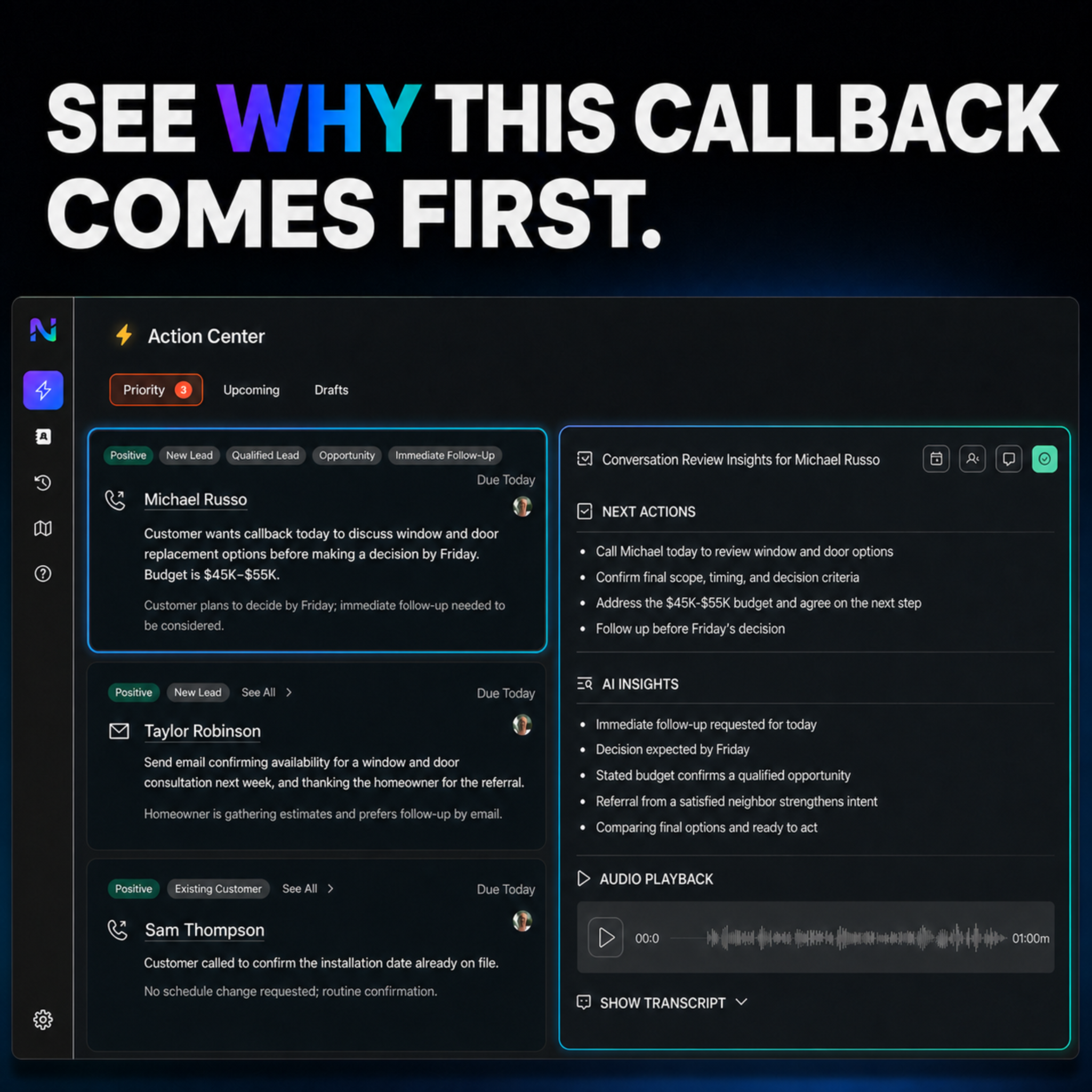
For every conversation, Numoloo delivers a short summary and a pre-drafted response email to Slack, your email inbox, or the Numoloo Action Center dashboard.
You see who to call, why they called, and what to say before you pick up the phone.
Numoloo is CRM-agnostic, so it works with how you already operate and needs no sales infrastructure to set up.
Try Numoloo free for 14 days. No credit card required.
Frequently Asked Questions
What is speed to lead?
Speed to lead is the practice of responding to a new inquiry as fast as possible, because faster contact means you catch more people while the need is fresh. It comes out of inside sales. It assumes someone is free to respond the instant the inquiry arrives, which is the part most phone-driven businesses cannot count on.
Is speed to lead worth it for a small business?
Speed to lead helps when you have someone whose job is to answer the phone immediately. Most phone-driven small businesses miss calls while doing the work, so the bigger lever is callback prioritization: returning the calls you missed in the right order. Use both when you can.
What is callback prioritization?
Callback prioritization is the practice of deciding which calls and voicemails to return first based on what each caller needs, not the order the calls came in. It assumes you will miss calls and have to return them in batches. The goal is to call the most pressing person back first so you keep the work.
How do I decide which call to return first?
Return the call from the person whose request is most time-sensitive and whose intent to buy or book is clearest, rather than the most recent or the oldest. Numoloo reads each call and voicemail for urgency, sentiment, and intent, then puts your callbacks in that order. This removes the guesswork of where to start.
Can speed to lead and callback prioritization work together?
Yes. Respond fast when someone is free to answer the moment a call comes in, and use callback prioritization to return the calls you could not catch. One covers the front of the conversation and the other covers the recovery.
Does Numoloo replace my CRM?
No. Numoloo is CRM-agnostic and works alongside whatever tools you already use, with no sales infrastructure required. It handles the calls and voicemails, reads them for urgency, sentiment, and intent, and tells you who to call back first.
The Bottom Line
Speed is about how fast you respond when you are free to respond.
Callback prioritization is about who you call back first when you are not, which is the situation most phone-driven businesses face every working day.
You cannot always control how fast you answer. You can always control the order you return the calls you missed.
Which call are you returning first tomorrow morning?